
Last updated November 25, 2026
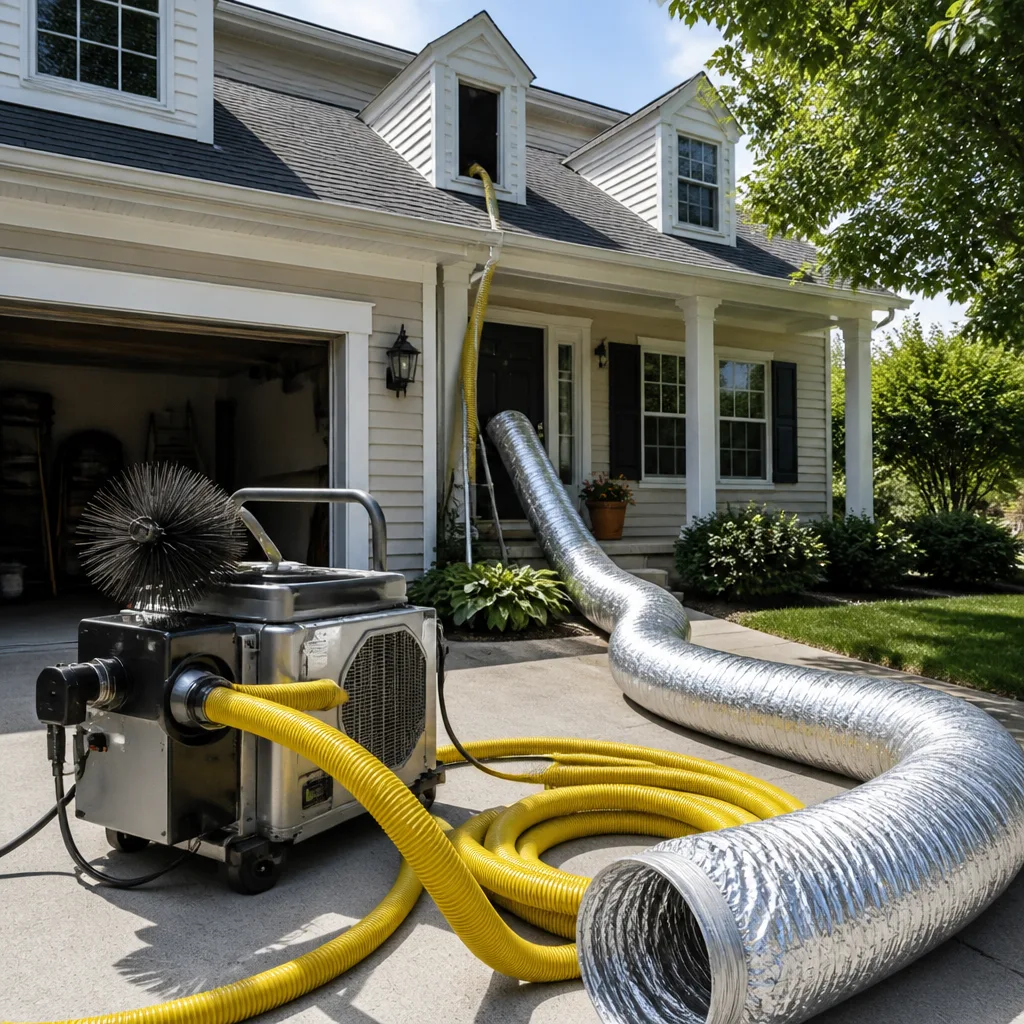 Whole-home duct cleaning
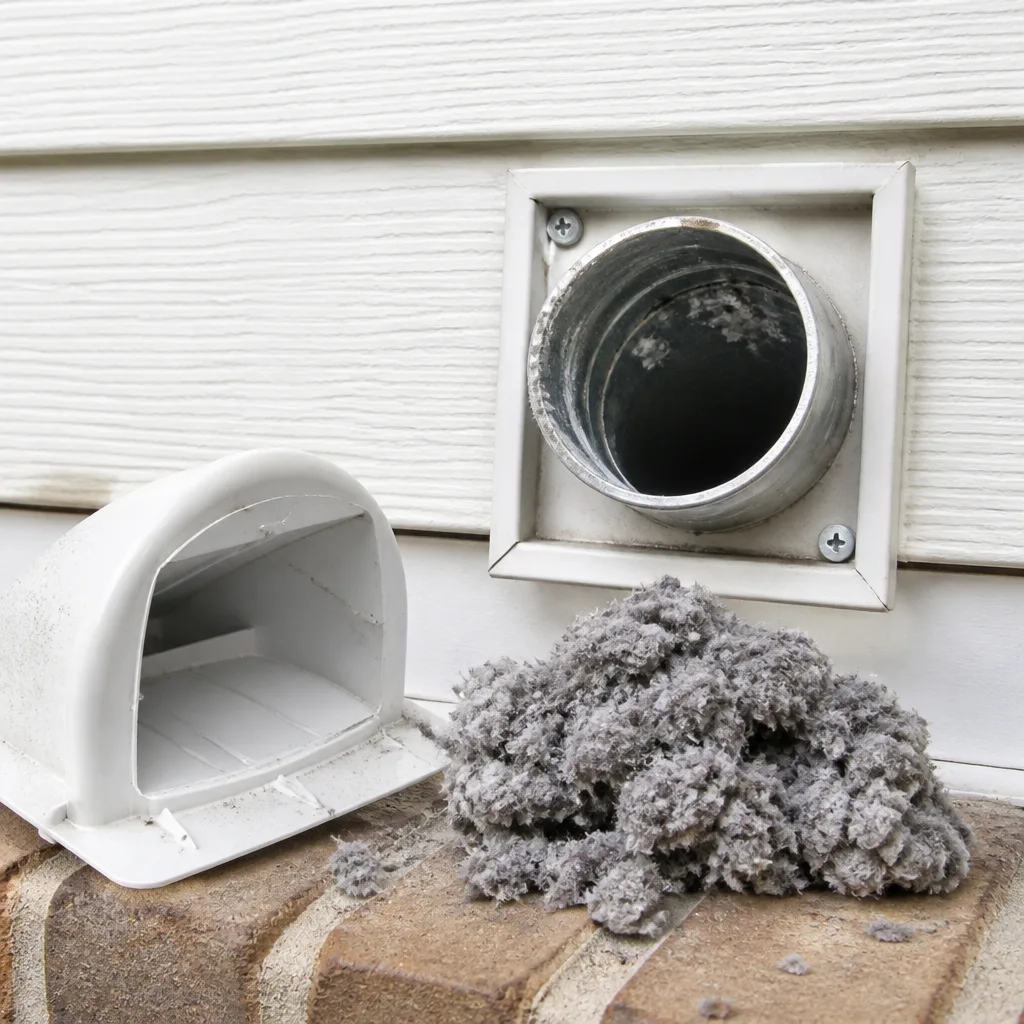 Dryer vent cleaning
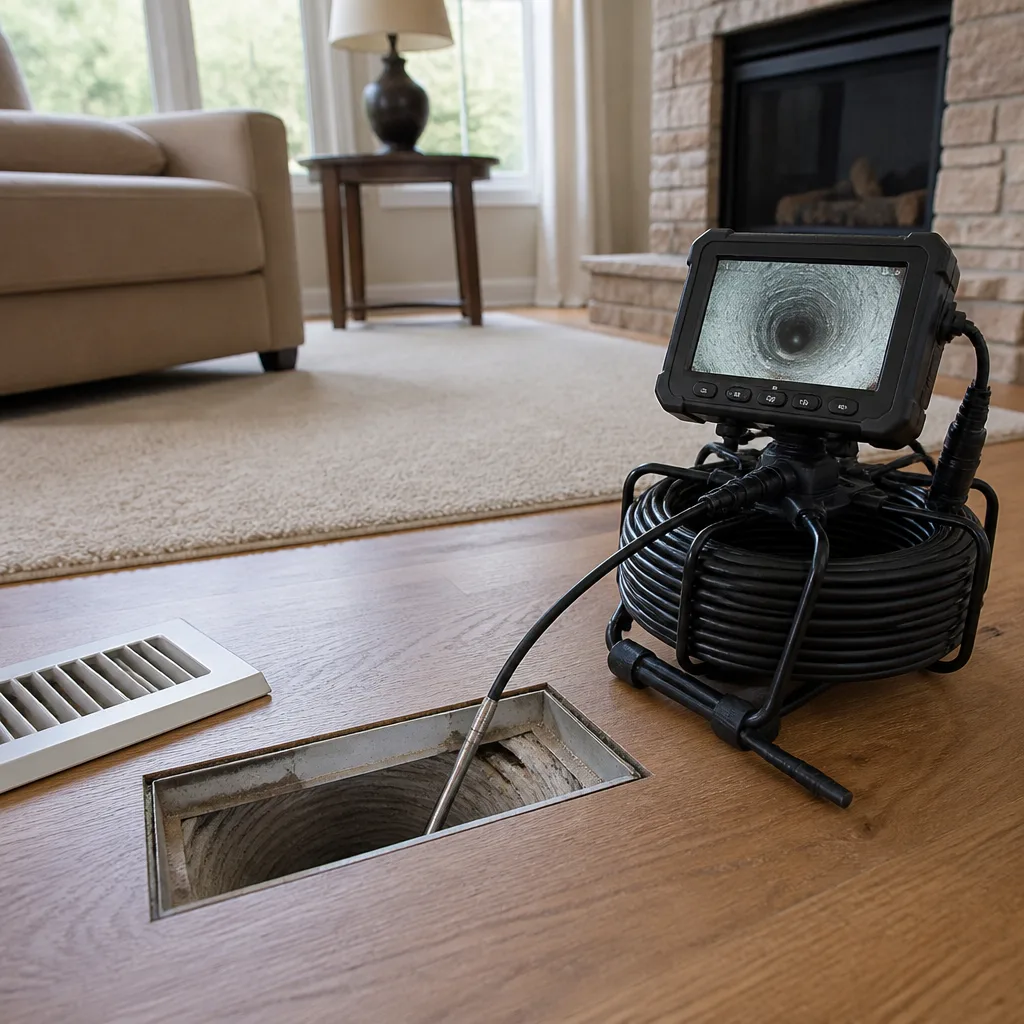 Camera inspection
 Sanitizing & deodorizing
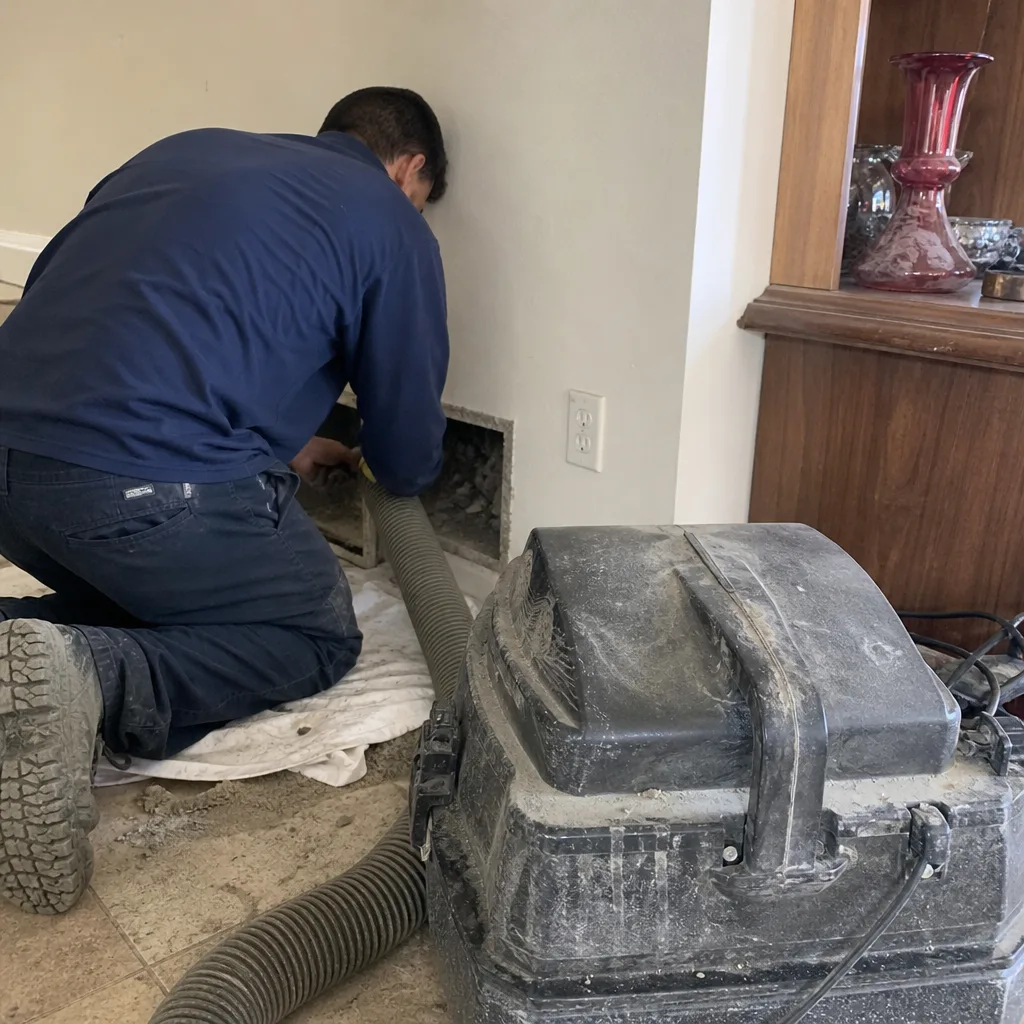
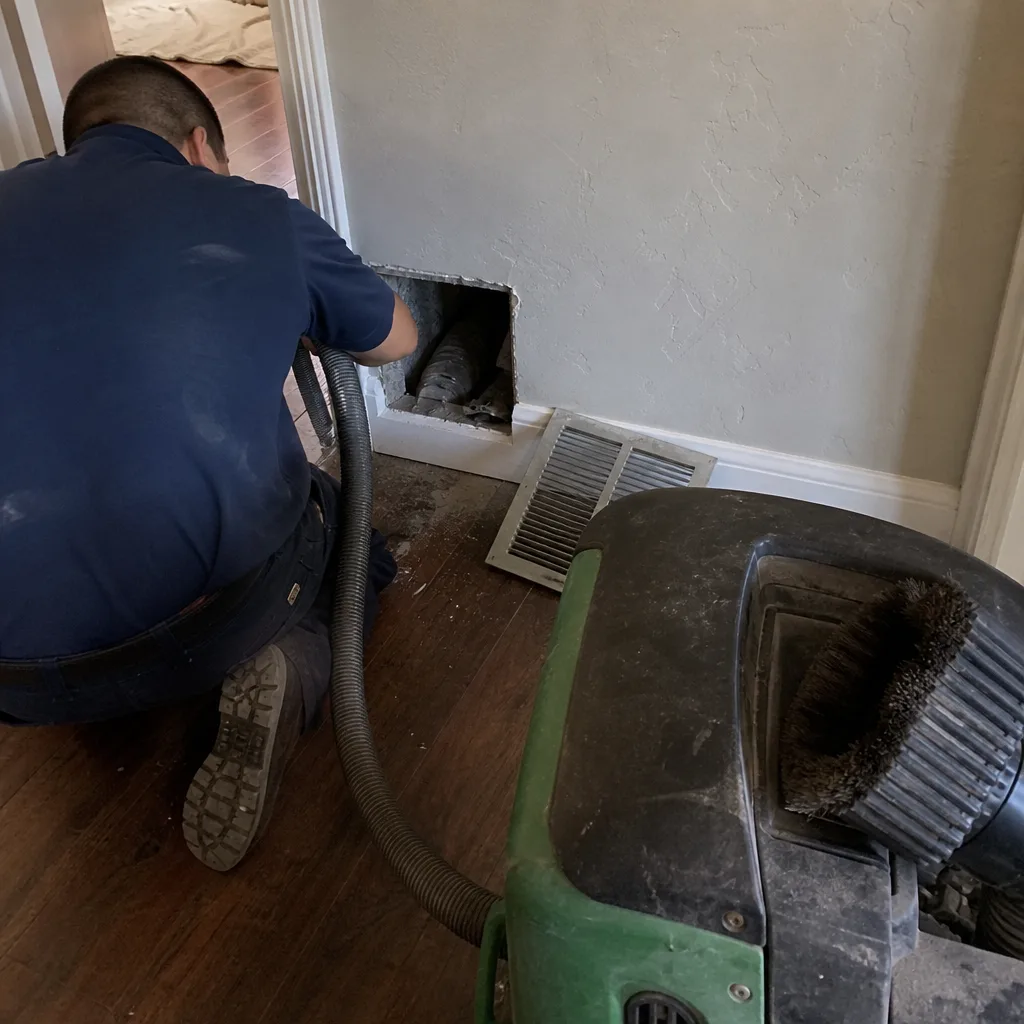
Whole-system duct and dryer vent check with before-and-after photos - you see exactly what came out of your vents
That "$99 whole-house special" is a bait ad - the real number appears once they are in your hallway, or the "clean" is a shop-vac at the register. We photograph the inside of your ducts before and after instead.
Seasonal Air Duct Cleaning Care for Tustin: Year-Round Homeowner’s Guide
Most Tustin homeowners treat air duct cleaning as a one-and-done task, usually squeezed in before the holidays or after a remodel. That instinct is reasonable, but it works against you here. Tustin’s outdoor air doesn’t follow a uniform calendar. Santa Ana wind events, fall wildfire smoke drifting down from the mountains to the north and east, and the spring marine layer each push a different load into your duct system at different times. A cleaning in January skips the heaviest weeks of the year. This guide breaks down what each month actually throws at your ducts in Tustin, when cleaning pays back the most, and how to adjust filters and prep for cooling season so one cleaning holds up through the summer months.
Quick Answer
For most Tustin homes, the highest-value time to clean air ducts is late November through December, right after Santa Ana wind season and the fall wildfire smoke window have passed. That timing removes the year’s largest accumulation before the system runs hard again in spring and summer. A second look at filters and duct condition in late spring, before peak air conditioning, keeps results intact through the hottest months.
Styles & brands we work with
- Whole-home duct cleaning
- Dryer vent cleaning
- Camera inspection
- Sanitizing & deodorizing
Table of Contents
- How Tustin’s weather actually stresses your ducts
- A month-by-month look at duct load in Tustin
- Why post-Santa Ana season is the best cleaning window
- How to adjust filter MERV rating seasonally
- Summer cooling prep that extends cleaning results
- Marine layer humidity and duct liner materials
- Why cleaning alone isn’t enough: repair and sealing
- Working on the whole air pathway
How Tustin’s weather actually stresses your ducts
Tustin sits in a basin of sorts: inland enough to feel real heat in summer, close enough to the coast that a marine layer rolls in on many spring and early-summer mornings, and positioned so that fall and winter Santa Ana winds push dry, dust-laden air through the canyons into the neighborhoods below the foothills. Each of those conditions loads your ducts in a different way, and each arrives on a different schedule.
Here’s how the three main stressors break down for a Tustin home:
- Wildfire smoke windows (roughly August into November, varying by year): Fine particulate settles into return-air grilles and the duct interior. Smoke residue is what makes ducts smell stale long after the air clears outside.
- Santa Ana wind events (typically October through December): Dry, gusty air drives dust and pollen through every crack and gap in the building envelope. Ducts pull that material in through returns.
- Spring marine layer humidity (roughly March through June, mornings especially): Moisture in the air interacts with duct liner, insulation, and any dust already sitting in the system. It’s a milder stressor than smoke, but it matters for materials.
When we assess a home in Tustin, we look at all three of those patterns before recommending a cleaning schedule. A household near the foothills deals with more wind-driven dust than one closer to the center of town, and a home with a large return in a hallway sees more accumulation than one with distributed returns. The right calendar is the one matched to your actual exposure, not a generic annual to-do list.
A month-by-month look at duct load in Tustin
Your duct system doesn’t experience the same conditions in February that it does in October. Here’s a rough seasonal map of what Tustin homes deal with through the year. Treat the months as approximate: a dry year shifts the wildfire window, and a cool spring pushes the marine layer deeper into summer.
- January – February: Cool, relatively settled weather. Low duct load. A good time for inspection and any repair or sealing work, since the system isn’t running hard.
- March – April: Marine layer mornings bring humidity into the picture. Duct liner and insulation get tested by moisture. Watch for musty smells on startup.
- May – June: Cooling season ramps up. Filters load faster as the AC runs daily. This is the window for a pre-summer filter upgrade and a visual check.
- July – August: Peak cooling. Ducts carry the most conditioned air of the year. Any leaks or gaps cost the most in energy and comfort now.
- September: Heat lingers, and the first wildfire smoke can arrive. Returns start collecting fine particulate.
- October – November: Santa Ana wind season. Dust moves through gaps. Smoke exposure peaks for many Tustin homes.
- November – December: The best cleaning window of the year. The system has absorbed its heaviest annual load, and cleaning here buys the most relief.
That order matters. Cleaning in early summer removes last year’s accumulation but leaves you exposed to the fall. Cleaning in late fall removes everything from the heaviest period and gives you a fresh start going into the quieter months.
Why post-Santa Ana season is the best cleaning window
Late November through December is the single highest-value window for a Tustin duct cleaning, because that’s when the two biggest stressors of the year have finished their run. By then, the fall wildfire smoke window and the Santa Ana wind events have together pushed dust, ash, and fine particulate into every return in the house. Cleaning after that period, rather than before, removes the layer that actually accumulated.
Three reasons this window tends to work best for our Tustin customers:
- You’re cleaning up after the cause, not before it. A January cleaning removes a small amount of settled dust and then the home absorbs a full year of smoke and wind on top of it. A November or December cleaning removes the big load and then the home sits through a quiet winter.
- The system is running less. Cooler months mean less AC use, so a freshly cleaned system isn’t immediately refilling. You get more of a “clean baseline” to measure against.
- It sets up spring and summer. A late-fall cleaning, followed by a filter check in spring, gives you a system that’s substantially cleaner going into peak cooling season than one that was last cleaned the previous January.
That said, timing should flex to your household. If someone in the home has asthma or allergies, a second cleaning after a particularly smoky fall, or one timed right before winter, is worth the call. If a renovation just wrapped up, drywall dust outweighs the seasonal calendar. The principle is straightforward: schedule around what your home’s air has actually experienced. Our air duct cleaning service covers this kind of timing-based work for local homes.
How to adjust filter MERV rating seasonally (without overloading your blower)
Filter rating should follow the seasonal load, not stay fixed on whatever was on the shelf. A higher MERV filter traps more fine particulate, which is useful during wildfire smoke season. It also restricts airflow more, which puts extra strain on the blower motor. The goal is to go higher during heavy smoke periods and step back down during normal months so the motor isn’t working against a filter that’s over-spec for the season.
Here’s a practical seasonal approach for a Tustin home:
- Check your system’s spec first. Most residential air handlers accept filters up to a certain MERV rating without significant pressure drop. Read the label on the air handler or ask an HVAC technician what your unit was designed for. Going well beyond that rating restricts airflow.
- Baseline months (January – August): Run a filter in the moderate range that the system was designed around. This maintains airflow and lets the blower motor run efficiently.
- Wildfire smoke window (roughly August – November): Step up to the highest MERV your system can handle while keeping adequate airflow. Change it more often during heavy smoke periods.
- Post-season reset (late November – December): Return to the baseline filter when the smoke clears. If you cleaned your ducts at the end of the fall, this is the moment to start with a fresh filter.
We install and service Honeywell and Aprilaire air quality components, which are specified on a lot of premium comfort setups and give you a clean path between filter rating and system capacity. A few homes near the hills in Tustin find that a mid-level filter during the smoke window with more frequent changes works better than chasing a very high MERV that the blower can’t handle. The right answer is specific to your unit, not a universal number.
Summer cooling prep that extends cleaning results through peak AC use
Cooling season in Tustin is when your duct system runs hardest and when any leftover dust or gap in the system costs you the most. A handful of steps before the AC starts running daily does more for a recently cleaned system than any single fix mid-summer.
- Book the cleaning before mid-May. Cleaning in spring means the dust is out before the system starts pushing air all day. Cleaning in June or July means the first several weeks of AC use push last season’s dust around.
- Inspect and seal obvious gaps. Duct leakage in summer wastes cooled air and pulls hot attic air back into the system. Sealing is often the cheapest way to extend the effect of a cleaning.
- Change the filter the day the AC starts running. A fresh filter at the start of cooling season gets you maximum life out of it before the summer dust refills the pleats.
- Check return grilles before the season. Return grilles collect dust first, and a clogged return starves the system. A quick vacuum of the grille in late April saves you a bigger problem in August.
- Consider a sanitizing treatment in late spring. If the system has any musty smell on startup, a cleaning plus a sanitizing treatment using Abatement Technologies or Guardsman products resolves it before the cooling season locks the smell in for months.
The principle behind all of these: fix the system before the busy season, not during it. During summer, a Tustin home runs its AC across most of the daylight hours, and any duct problem is amplified. Getting ahead of it earlier is the whole point of seasonal care. We go through this checklist in our HVAC cleaning work and can fold it into a duct cleaning visit.
Marine layer humidity and duct liner materials
Spring mornings in Tustin regularly pull in a marine layer that pushes humidity up sharply, and then it burns off by afternoon. That daily swing matters to duct interiors more than most homeowners expect. Flexible duct liner and any interior insulation are most vulnerable to moisture during that transition because condensation forms where warm, humid air meets a cooler duct surface, or where a return grille pulls in moist morning air before the AC has warmed the system.
What a homeowner should watch for in spring:
- Musty smell when the AC first kicks on. That’s typically moisture interacting with accumulated dust or liner material, not a sign of a serious problem, but it’s worth investigating.
- Visible dark spots on duct liner or insulation. Moisture that stays trapped can affect liner integrity. This is a professional assessment, not a DIY cleanup.
- Condensation on exposed ductwork. In an unconditioned attic, ducts that carry cooled air on a humid morning can sweat. Proper insulation and sealing reduce this.
Dry season conditions present the opposite issue: very low humidity dries out dust and makes it easier to move around. That’s why fine dust stays airborne so easily in the fall and why smoke residue becomes a light, mobile particulate. Liner in a dry-season home is generally fine, but it holds plenty of that dust. A spring cleaning paired with the cooler fall cleaning is a good option for Tustin homes with sensitive occupants or a large amount of flexible ductwork.
Why cleaning alone isn’t enough: repair and sealing
Clean ducts are only half the job. Every reputable duct specialist has seen the same pattern: a system is cleaned, the homeowner notices a difference for a few weeks, and then the problem comes back because the root cause was never touched. Leaky ducts pull in dust, attic air, and in some cases garage or crawlspace air through gaps that the vacuum didn’t fix.
For a Tustin home, the highest-value fix after a cleaning is a duct inspection and sealing pass. That means looking at joints, connections at the air handler, and any run of flexible duct that has come loose or been crushed. Common causes we find going wrong:
- Loose connections at the plenum. These open up over years of thermal cycling and pull unfiltered air into the system.
- Disconnected or crushed flex runs. Flexible duct sections hidden above a ceiling or in an attic can bend too sharply or come apart at a joint.
- Undersized or damaged returns. Returns that have been crushed or blocked starve the system and reduce the ability of the filter to do its job.
A duct cleaning without a repair and sealing pass can be undone in a single season. We offer duct repair and sealing as part of our service scope so a Tustin home isn’t left with leaks that quietly refill the system. If your cleaning visits keep solving the same problem, that’s the signal to look at the envelope, not just the interior of the ducts.
Working on the whole air pathway
Ducts are one segment of a longer path that air travels through a home. A dryer that’s not venting well, HVAC equipment that’s full of dust, and air treatment that’s not doing anything measurable all sit on that same path. Seasonal care works best when you think about the entire pathway rather than one component.
What a full-system seasonal check should cover:
- Air duct cleaning: The interior of the supply and return ductwork, cleared with contractor-grade equipment such as Rotobrush and Nikro rotary brush and HEPA-vacuum systems rather than consumer tools.
- HVAC cleaning: The air handler, coil, and blower, which collect dust that the duct cleaning alone won’t remove.
- dryer vent cleaning: Lint accumulation is a fire risk and a duct cleaner that skips this leaves a real hazard untouched.
- Duct repair and sealing: Fixing the leaks that undermine the cleaning.
- Air quality and sanitizing: Optional treatment using Abatement Technologies or Guardsman products to reduce microbial and odor issues that cleaning alone leaves behind.
A single provider who handles all five removes the need to coordinate between contractors. At Tustin Air Duct Cleaning Pros, we run these as one connected service so the air leaving your registers is filtered, cleaned, sealed, and treated as part of the same effort. That coordination is worth more in a seasonal care plan than any single visit, especially when the fall cleaning window is tight.
Common Mistakes to Avoid
- Cleaning in early winter before the fall smoke has cleared. In a smoky year, waiting until late November or December means the smoke residue is actually gone from the system, not sitting on top of a fresh cleaning.
- Running an over-spec MERV filter year-round. A high-MERV filter during mild months restricts airflow and strains the blower. Step up during smoke season, step back down afterward.
- Skipping repair and sealing after a cleaning. Leaks pull dust back in within months. If the ducts aren’t sealed, the cleaning was temporary.
- Treating a spring musty smell as harmless. In a marine-layer climate, that smell usually points to moisture and dust in the liner, and it gets worse through cooling season if left alone.
- Ignoring the dryer vent. Dryer vent cleaning is part of the air pathway, and lint buildup is a genuine fire risk that many duct cleaners skip.
- Scheduling cleaning only in peak summer. Cleaning in July means the first several weeks of the AC pushing last season’s dust through the home. Clean ahead of the busy period, not during it.
- Assuming a coupon price means a full-system clean. A low teaser price often covers only a small number of vents or one system, with the full scope quoted once the technician is on site. Ask what the flat price covers before the visit.
See the difference
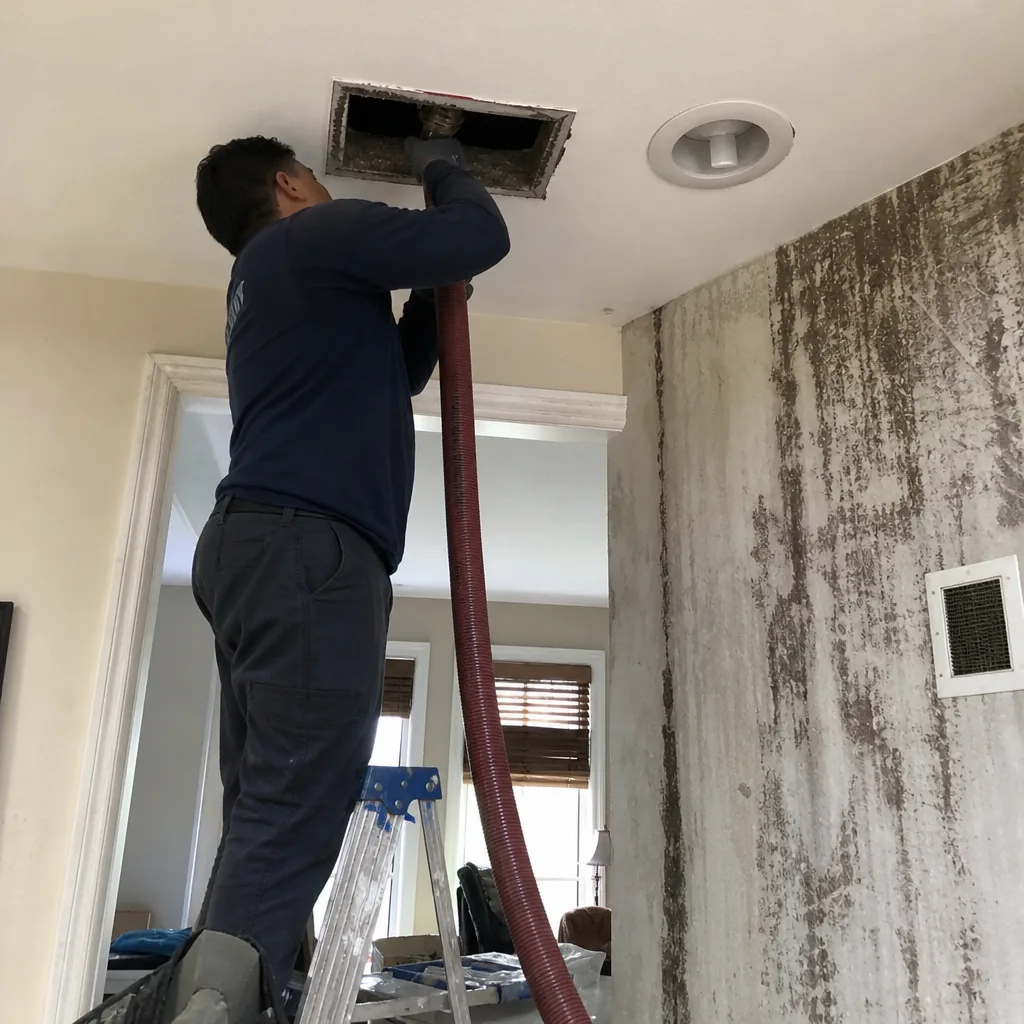 Before
 After
 Before
 After
 Before
 After
When to Call a Professional
Bring in a professional when the seasonal signs point past simple filter care: musty smells that return with the AC, visible dust blowing out of return grilles shortly after a cleaning, a system that hasn’t been cleaned through multiple seasonal cycles, or a home that’s just been through a renovation or wildfire season. If your cleaning visits keep solving the same problem, a repair and sealing assessment is worth scheduling. When filters choke faster than expected or the system runs louder in summer, an HVAC cleaning plus a duct inspection is usually more efficient than guessing. Tustin Air Duct Cleaning Pros offers free estimates in Tustin – call (844) 443-3616. We answer 24/7. Fast dispatch from 7am to 7pm, Sunday through Friday. The local pro is licensed and insured as their state requires.
Frequently Asked Questions
Late November through December, after the fall wildfire smoke window and Santa Ana wind events have passed, is typically the highest-value window for most Tustin homes. That timing removes the biggest annual load before the system runs hard again in spring and summer. Call (844) 443-3616 for an exact quote for your home; estimates are free.
Most Tustin homes benefit from a cleaning roughly every two to three years, with the timing shifted toward late fall. Homes with pets, allergies, a recent renovation, or heavy exposure to wildfire smoke often need cleaning more often, closer to every one to two years. If the smell or dust returns within months, that’s usually a sign of a leak that needs sealing, not a cleaning. Call (844) 443-3616 to have the system assessed.
Yes, mainly in spring when humid morning air meets cooler duct surfaces and condensation forms in the liner or insulation. That moisture typically shows up as a musty smell when the AC starts. It’s not a serious problem when caught early, and a cleaning plus a sanitizing treatment handles most cases. Call (844) 443-3616 for a free estimate.
Yes, if your system’s air handler can handle the higher rating without restricting airflow. Step up during the smoke window and return to your baseline rating afterward, or the blower works harder than it needs to for the rest of the year. When in doubt, a technician can check the spec on your unit. Call (844) 443-3616 to talk through the right filter rating for your system.
Pricing is set per system based on what the job requires, and a written estimate is what sets the final price. Be wary of any quote that’s a teaser figure covering only part of the system, with the rest filled in at the visit. Our approach is one flat price per system, agreed before work starts, with before-and-after photos of your own ducts. Call (844) 443-3616 for a free estimate.
Low quotes often cover a limited number of vents, skip components like the dryer vent and HVAC equipment, or use consumer-grade tools instead of contractor-grade rotary brush and vacuum systems. The result is a quick surface pass that doesn’t hold up through the next seasonal cycle. Ask what a quote covers before you compare it to a full-system price. Call (844) 443-3616 for an honest, itemized estimate.
The right way to verify a duct cleaning is before-and-after photos of your own ducts, plus a walkthrough of what was cleaned and what was sealed. Anything short of that leaves you taking the story on faith. Our team photographs the work as a standard part of the visit. Call (844) 443-3616 to schedule.
If the same dust or musty smell keeps coming back within one season, the ducts are probably leaking air from the attic, garage, or wall cavities, and cleaning alone won’t fix it. A duct inspection will tell you which is the case. Call (844) 443-3616 for a free estimate on the assessment.
The Bottom Line
Seasonal duct care in Tustin works best when it follows the actual weather, not a generic calendar. The heaviest stress on your ducts comes from fall wildfire smoke and Santa Ana wind events, which means late November through December is the highest-value cleaning window for most homes. Spring marine layer humidity affects duct liner and calls for a musty-smell check, and summer cooling season is the test of whether the fall cleaning and sealing held up. Adjust your MERV filter to match the season, seal any leaks you find, and keep the dryer vent in the picture. Time the work to the stressors and the system stays cleaner, longer.
Written by the team at Tustin Air Duct Cleaning Pros.