
Last updated November 25, 2026
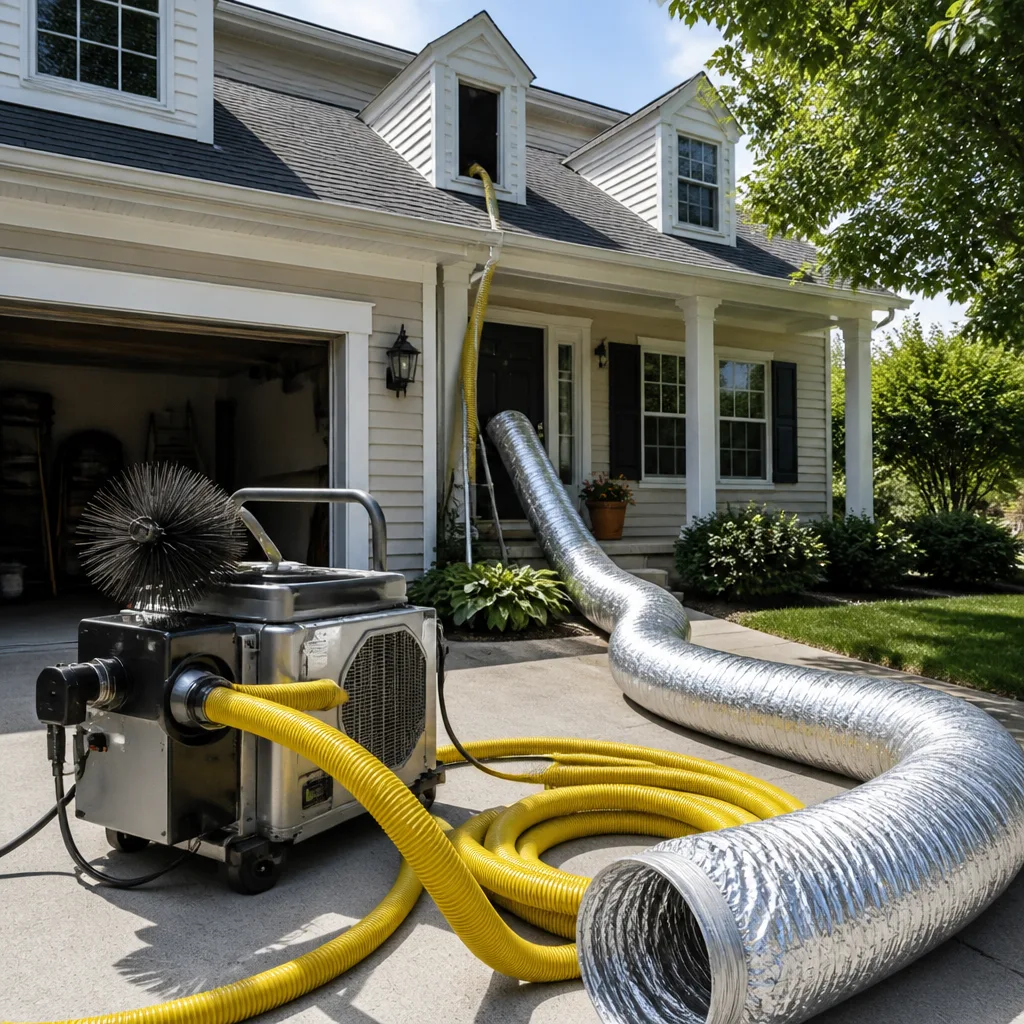 Whole-home duct cleaning
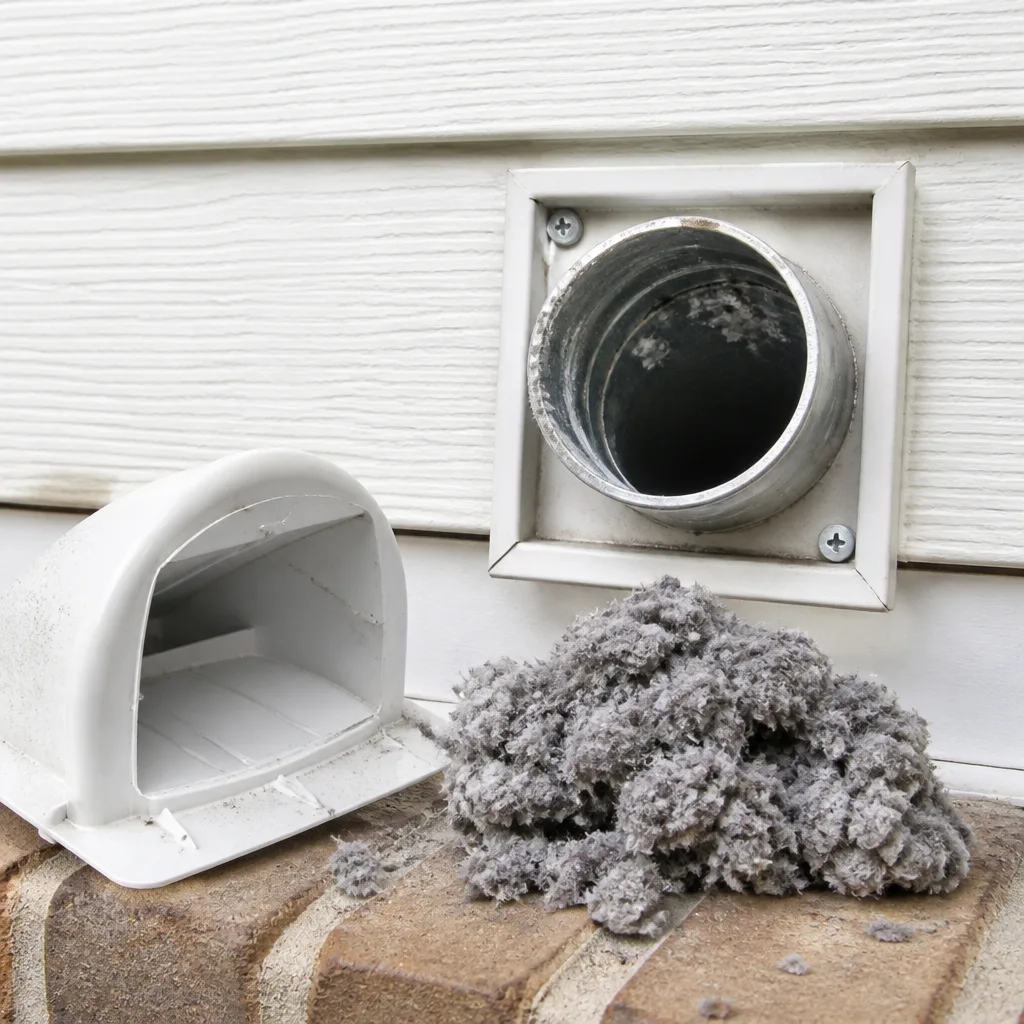 Dryer vent cleaning
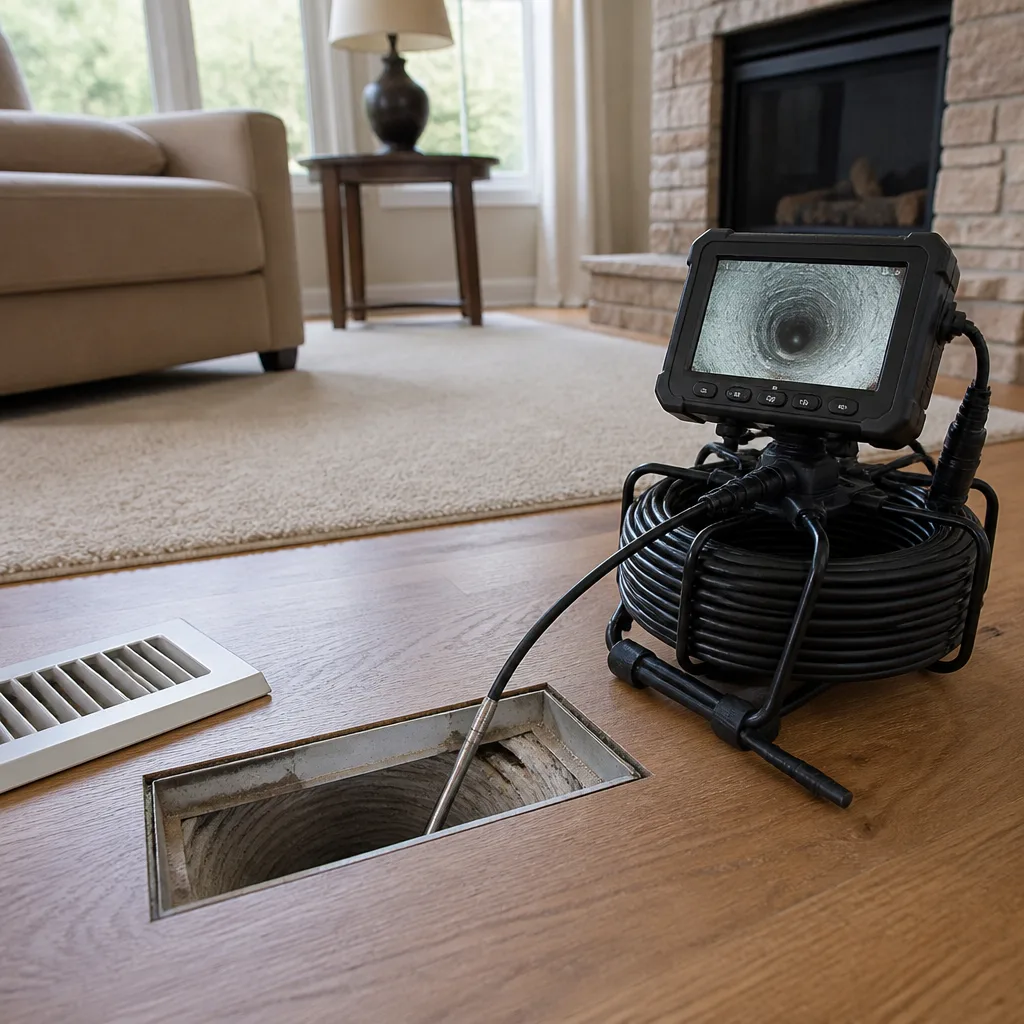 Camera inspection
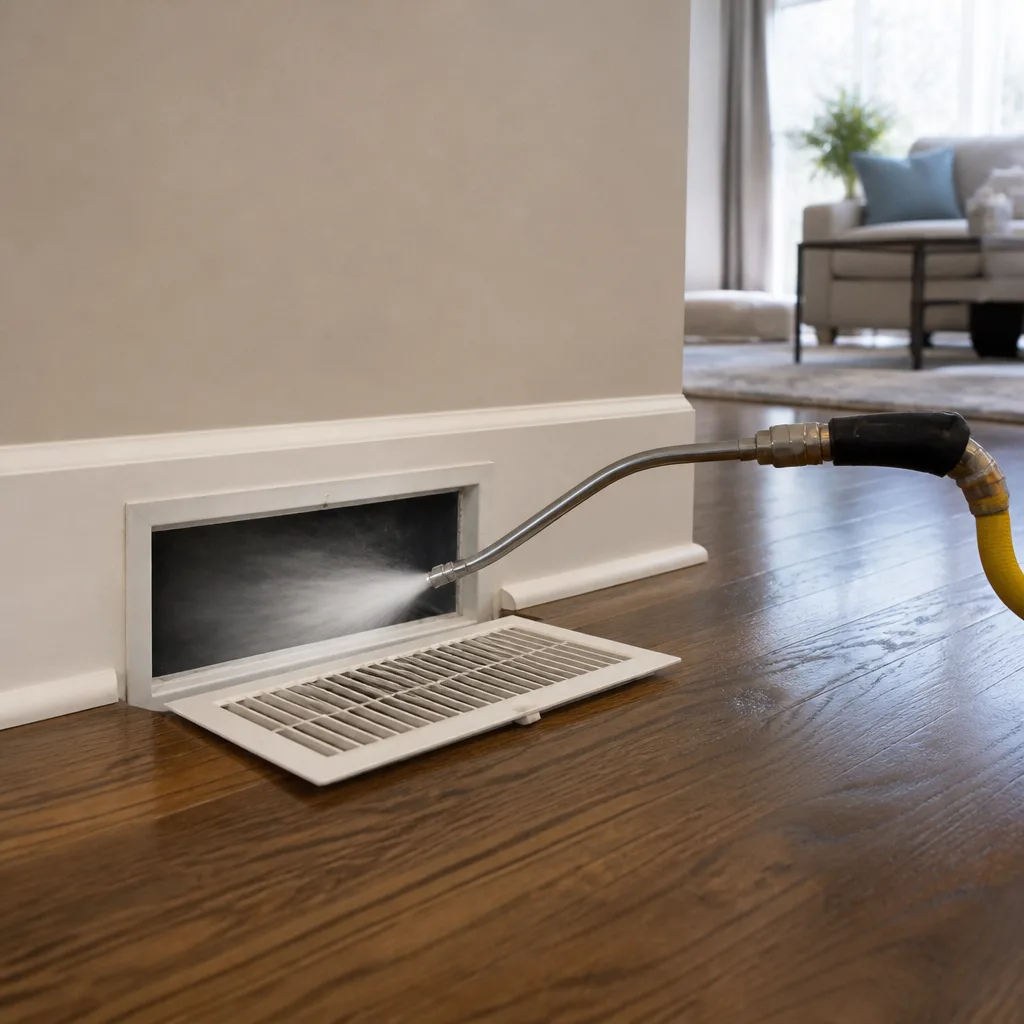 Sanitizing & deodorizing
Whole-system duct and dryer vent check with before-and-after photos - you see exactly what came out of your vents
That "$99 whole-house special" is a bait ad - the real number appears once they are in your hallway, or the "clean" is a shop-vac at the register. We photograph the inside of your ducts before and after instead.
The Complete Guide to Air Duct Cleaning in Tustin
Most homeowners in Tustin assume duct cleaning is the same job no matter who shows up. It isn’t. The house you live in changes what a proper cleaning actually requires. Homes built during Tustin’s major tract development boom of the 1970s through the 1990s are still running original ductwork, and many have never been inspected, let alone cleaned. Add a dry inland climate, a mix of single-story homes with long attic duct runs, and the fine grit that Santa Ana winds push through the region, and you get a job that a quick shop-vac pass won’t touch. This guide maps the full picture: what’s inside your ducts, what a legitimate cleaning looks like, and how to tell the difference.
Quick Answer
Air duct cleaning in Tustin means using a negative-pressure vacuum and rotary brush system to remove accumulated dust, debris, and contaminants from the entire duct pathway – not just the registers you can see. A proper job follows the NADCA ACR standard, includes the supply and return sides plus the HVAC components, and takes several hours in a typical Tustin home. The result should be verifiable with before-and-after footage, not just a receipt.
Styles & brands we work with
- Whole-home duct cleaning
- Dryer vent cleaning
- Camera inspection
- Sanitizing & deodorizing
Table of Contents
- Why Tustin Homes Need Duct Cleaning More Than You’d Think
- What’s Actually Inside Your Ducts
- Contact Vacuum vs. Negative-Pressure Cleaning: The Difference That Matters
- What the NADCA ACR Standard Actually Requires
- Attic Duct Runs and Heat-Related Debris in Tustin Single-Story Homes
- Why Clean Ducts Are Only Half the Job
- Red Flags That a Cleaning Revealed a Bigger HVAC Problem
- How Often Does Air Duct Cleaning Really Need to Happen?
Why Tustin Homes Need Duct Cleaning More Than You’d Think
Tustin sits in a part of Orange County that gets dry, windy, and dusty in ways that coastal cities like Huntington Beach or Newport simply don’t. When the Santa Ana winds push through the canyons and across the inland basin, they carry fine particulate – dust, pollen, ash from the surrounding hills – and that particulate has to go somewhere. In a home with a forced-air HVAC system, it goes into the return ducts and settles across the inside of the ductwork.
The housing stock compounds the problem. A large share of Tustin’s residential neighborhoods were built between the 1970s and 1990s, which means a lot of homes are still on their original sheet metal and flex duct. Original ductwork from that era has usually never been inspected. If it has been cleaned, it was often years ago, before the homeowner bought the property.
Here’s the part that matters most: the loading rate. In a coastal market, humidity holds dust down and air movement is gentler. In dry inland Tustin, particulate stays airborne longer and travels farther. Ducts in a Tustin home can accumulate debris noticeably faster than the same system in a home a few miles closer to the water. That doesn’t mean every Tustin house needs annual cleaning – it means the interval between cleanings is genuinely shorter here, and the difference is worth understanding before you decide to skip it.
The practical takeaway: if you live in a Tustin home built in that 1970s-1990s window and you’ve never had a duct inspection, you don’t actually know what’s in your system. A proper air duct cleaning assessment will tell you.
What’s Actually Inside Your Ducts
When we open a return duct in an older Tustin home, the contents are consistent and predictable. Here’s what accumulates:
- Fine particulate dust. The dominant debris in this climate – a talc-like powder that coats duct walls, flex ridges, and blower wheels.
- Construction debris. Homes that have been remodeled (kitchens, bathroom adds, room additions common in established Tustin neighborhoods) often have drywall dust and sawdust in the supply runs that was never properly cleared.
- Pollen. The inland growing season is long, and pollen from sycamores, oak, and ornamental landscaping gets pulled into the return side every spring.
- Pet dander and hair. Sticks to duct walls and builds up at turns and joints where airflow slows.
- HVAC component debris. Blower wheel, evaporator coil face, and the air handler cabinet all load up with the same material as the ducts.
- Microbial growth (in some cases). Not every system has it, but a duct that has had moisture intrusion – a leaky fitting, a disconnected run in a humid attic – can develop it.
The point isn’t that your ducts are dangerous. It’s that dust that’s stuck to the inside of a duct is a surface, and surfaces need to be cleaned, not just vacuumed at the register. Consumer-grade vacuums pull a fraction of what’s on the duct wall. That’s why professional equipment matters, and why a proper assessment should identify which of these categories is actually present in your Tustin home before anyone quotes the work.
Contact Vacuum vs. Negative-Pressure Cleaning: The Difference That Matters
This is where most of the “duct cleaning” you’ll see advertised falls short. There are two fundamentally different ways to clean a duct system, and only one of them actually cleans the duct.
Contact vacuum cleaning
A vacuum head is inserted at each register and moved along the accessible portion of the duct. It picks up loose debris from the surface it can reach. It does not create pressure differential, so debris upstream simply stays where it is, and in a flex duct system with long runs and ridges, the contact head misses most of it. This is what a lot of low-price trucks actually do.
Negative-pressure cleaning
A high-capacity vacuum (Rotobrush and Nikro systems, for example) is connected to create negative pressure throughout the entire duct system. Rotary brush heads and air whips then dislodge debris from every duct wall, every turn, and every flex ridge, and the negative pressure pulls it to a HEPA collection point. The entire system is cleaned as one unit, not register by register.
Why this matters for older Tustin flex duct in particular: the interior of flex duct has a helical ridge that traps fine dust. A contact vacuum can’t get into the valley of the ridge. A rotary brush system can. And in a climate where the dust is fine enough to pack into those ridges like a coating, the difference between the two methods is the difference between a surface wipe and a clean duct.
Ask any company you consider which method they use, and ask what happens at the compressor and air handler. If they can’t answer both clearly, that’s your answer.
What the NADCA ACR Standard Actually Requires
NADCA – the National Air Duct Cleaners Association – publishes a standard called ACR (Assessment, Cleaning, and Restoration). It’s the industry benchmark, and most “duct cleaning” companies don’t follow it. Here’s what it actually calls for:
- Assessment before cleaning. Inspect the system and document conditions before any tools go in. You should know what’s there and be told what will be done about it.
- Source removal, not just surface cleaning. All visible debris attached to interior surfaces must be dislodged and removed – not agitated into the air and left.
- Cleaning of the whole system. Supply and return ducts, plus system components: blower, plenum, air handler cabinet, evaporator coil face, and accessible registers and grilles.
- Negative pressure maintained throughout. The entire system is under vacuum while work happens, so dislodged debris leaves the system rather than settling back into it.
- Before-and-after photos or video. The customer should see the condition of the ducts before and after, not be told verbally that the work happened.
- No chemical treatment as a substitute for cleaning. Sanitizing and deodorizing – Abatement Technologies and Guardsman products, for example – are applied to a clean duct, not a dirty one. A “fogging” service is not cleaning.
In our experience, what a lot of advertised “cleaning” vans actually do is items 3 and 5 incompletely: pass a contact vacuum head over the accessible runs, then show you a photo of one clean-looking section of duct before leaving. That’s a partial job presented as a full one.
If a company can’t tell you which standard they work to, and can’t show you before-and-after footage of the actual duct system in your Tustin home, treat that as a red flag.
Attic Duct Runs and Heat-Related Debris in Tustin Single-Story Homes
A lot of Tustin ranch homes are single-story, and that means a lot of them have HVAC duct runs in the attic – often long runs through a hot, vented space. That configuration creates a specific problem pattern that basement-served homes in other parts of the country simply don’t have.
Attic runs sit at temperatures far above the living space through most of the year. Flexible duct with even slight deterioration at a fitting will pull attic air – insulation fibers, dust that migrated up through the attic floor, particulate that came in through the vents – into the airstream. Over a few seasons, the interior of the run picks up a fine film of this material that a contact vacuum would never fully remove.
Attic runs are also where you find most disconnected or loosely taped fittings. A run that’s come apart at the plenum or at a wye doesn’t deliver conditioned air to a room – it delivers attic air, and that shows up as a hot, dusty room while the rest of the house feels normal.
What to watch for in a Tustin single-story home:
- A room that stays noticeably warmer in summer or cooler in winter than rooms fed by other runs.
- Visible dust around a register even after the register was cleaned.
- High return airflow at some registers and very low at others.
- Any accessible attic run that looks crimped, crushed, or disconnected at a fitting.
If the assessment reveals heat-related duct damage or fitting failure, the right next step isn’t another cleaning pass – it’s duct repair and sealing. Clean ducts are only half the job. The other half is making sure the pathway doesn’t leak after it’s cleaned.
Why Clean Ducts Are Only Half the Job
We work on the whole air pathway, and that framing matters more than it sounds. A duct cleaning that removes debris from a leaky, poorly sealed system is a job half done. Air that leaks out of a supply run in the attic doesn’t reach the room, and air that leaks into a return run pulls dust in faster than a clean duct can stay clean.
This is why we handle HVAC cleaning on the same visit as the duct work. The blower wheel, evaporator coil, and air handler cabinet are all part of the same air pathway, and they collect the same dust the ducts collect. A blower wheel coated in dust moves less air and can run hotter. A dirty coil can’t transfer heat as effectively. Cleaning the ducts but leaving the HVAC components dirty means the next few months of airflow will coat the clean ducts again, faster than they would otherwise.
The full-system approach for a typical Tustin home covers:
- Duct cleaning on the supply and return sides, under negative pressure.
- HVAC component cleaning: blower, plenum, cabinet, and coil face.
- Duct repair and sealing where the assessment found leaks, disconnected runs, or failing tape and mastic.
- Air quality and sanitizing treatment – applied to a clean duct pathway, using Abatement Technologies and Guardsman products – where microbial growth or odor is present.
- Dryer vent cleaning, which is a separate fire-risk reduction service and one a lot of duct companies skip or subcontract out.
- Filtration and humidity component service: we stock and service Honeywell and Aprilaire components, two of the most specified brands in residential HVAC filtration and humidity control.
Doing all of that under one roof means you’re not coordinating three different companies to get the whole air pathway handled. One assessment, one scope, one visit.
Red Flags That a Cleaning Revealed a Bigger HVAC Problem
A duct cleaning that turns up a bigger problem isn’t a failed cleaning – it’s a successful assessment. Here’s what we look for when the ducts come open, and what it usually points to:
- Heavy microbial growth in a duct run that had no obvious moisture source. Usually points to a leak or a disconnected run pulling in attic or unconditioned air.
- Construction debris in the supply side years after a remodel. Suggests the runs were never properly cleared and that debris is being distributed every time the system runs.
- A blower wheel that’s packed with fine dust despite a recent cleaning. Usually means the return side is leaking and pulling debris straight into the blower.
- Crushed or kinked flex duct at a run near a roof or attic access. Common in single-story Tustin homes; a run that’s been stepped on or crushed can’t deliver the airflow it was sized for.
- Visible separation at a plenum or wye fitting. The system is leaking conditioned air into the attic and pulling unconditioned air into the return.
- A persistent odor that returns within weeks of sanitizing. Usually moisture – a leak, a disconnected run, or an evaporator drain issue – feeding new growth.
- Coil face with heavy dust despite an upstream filter. Either the filter is bypassing its frame or the return side is leaking after the filter.
All of those are correctable. The point is that fixing them at the same time as the cleaning saves you a second visit later, and fixes the cause instead of masking the symptom.
How Often Does Air Duct Cleaning Really Need to Happen?
There’s no single answer that applies to every Tustin home. The right interval depends on the house, the household, and the system – not on a manufacturer’s recommended number. That said, here’s how we’d frame it for the Tustin market:
- Recently remodeled or new-to-you home: clean once, soon. Construction debris and previous-owner dust both need to come out.
- Original 1970s-1990s ductwork, never inspected: get an assessment now. What you find determines the cleaning interval.
- Pets, allergy-sensitive household members, or a dusty inland property: shorter interval than a quiet household in the same neighborhood.
- Recent duct repair or HVAC replacement: clean after, not before, so the new system starts clean.
- Everyday baseline: most Tustin homes fall in a range of several years between cleanings when there hasn’t been a renovation, water intrusion, or a change of occupants. A proper assessment will tell you where in that range yours sits.
The mistake is treating duct cleaning as a fixed-maintenance item instead of a condition-based one. Compare two identical Tustin homes and one may need cleaning in two years and the other in eight, depending on duct condition, filtration, and how the household uses the system.
How Much Does Air Duct Cleaning Cost in Tustin?
Air duct cleaning in Tustin is priced per system, not per vent, and we give a flat price for the whole scope before work begins. That’s the honest structure for the job: pricing per vent rewards companies for counting vents, not for cleaning ducts. Most Tustin single-family homes fall into a whole-system range that includes the supply and return sides plus the HVAC components, and the written estimate sets the final price.
| Scope | Typical Approach | What Affects It |
|---|---|---|
| Duct cleaning (supply + return + HVAC components) | Priced per system | Number of runs, accessibility, duct material, condition found during assessment |
| Duct repair and sealing | Priced per job, based on what the assessment finds | Number of failed fittings, disconnected or crushed runs, accessibility in attic |
| Air quality and sanitizing | Priced per system | Presence of microbial growth or odor, duct surface area |
| Dryer vent cleaning | Priced per vent run | Run length, number of turns, roof vs. wall termination, access |
| HVAC cleaning | Priced per system | Blower and coil condition, air handler accessibility |
If a quote is dramatically lower than everything else you’ve gotten, the right question isn’t “why is this one cheaper” – it’s “what’s missing from this scope.” A contact-vacuum-only pass at a low flat price is cheap because it isn’t the whole job. An assessment that documents what’s actually in your ducts is what should set the scope, and the scope should be agreed in writing before anyone puts a tool in the ductwork.
See the difference
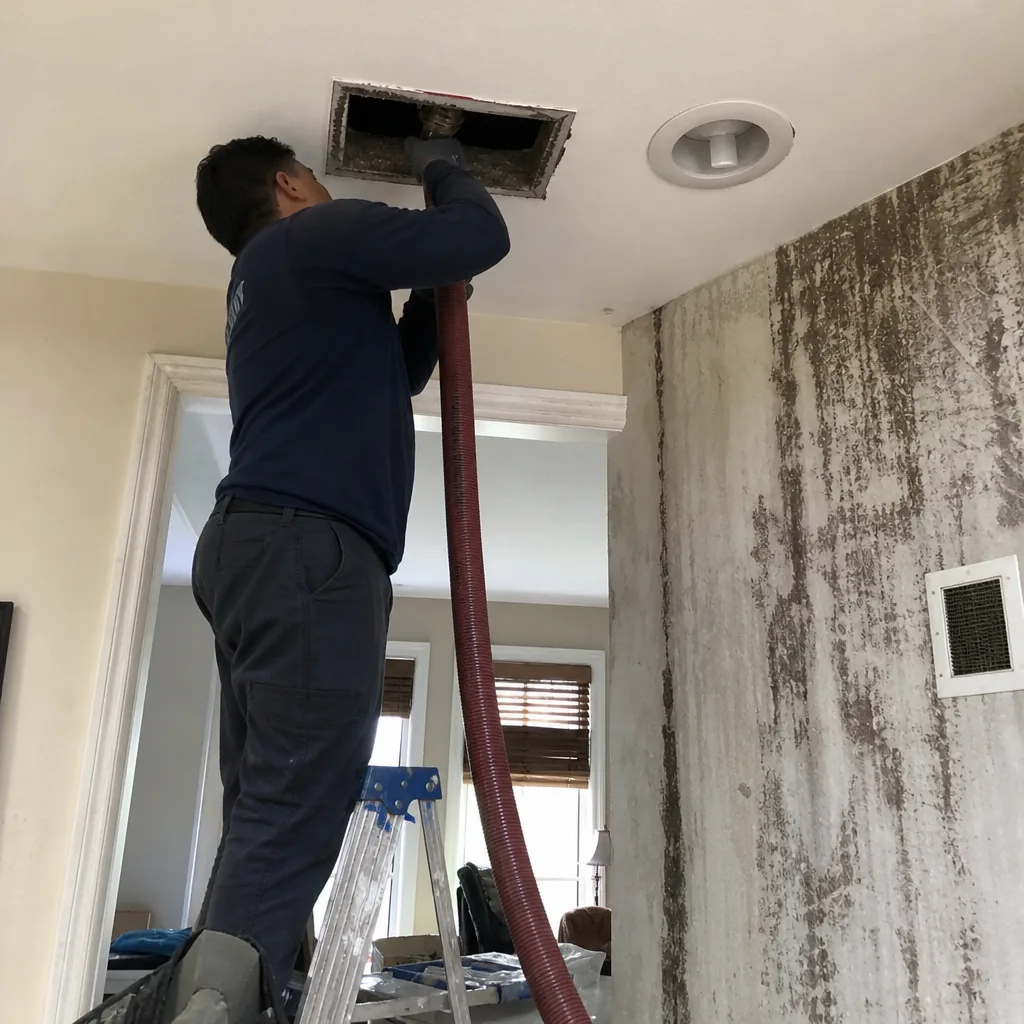 Before
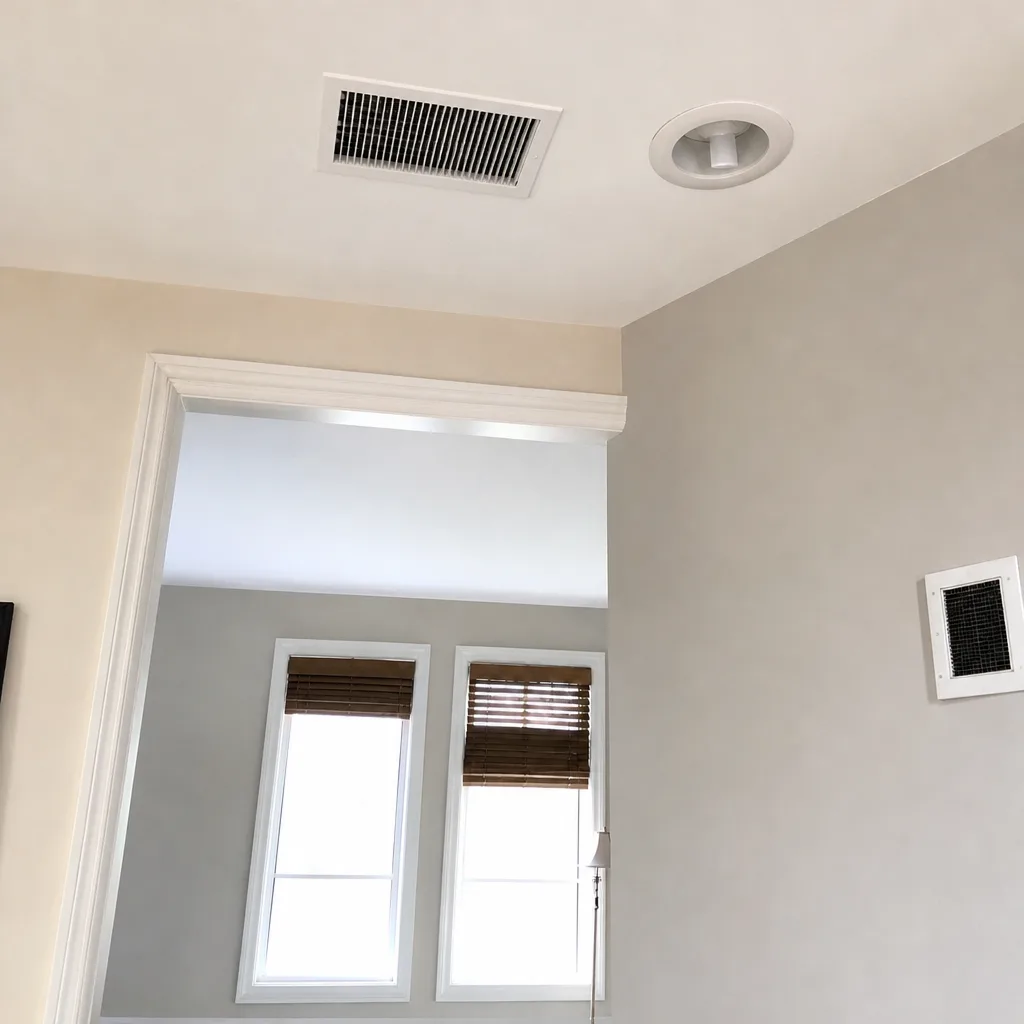 After
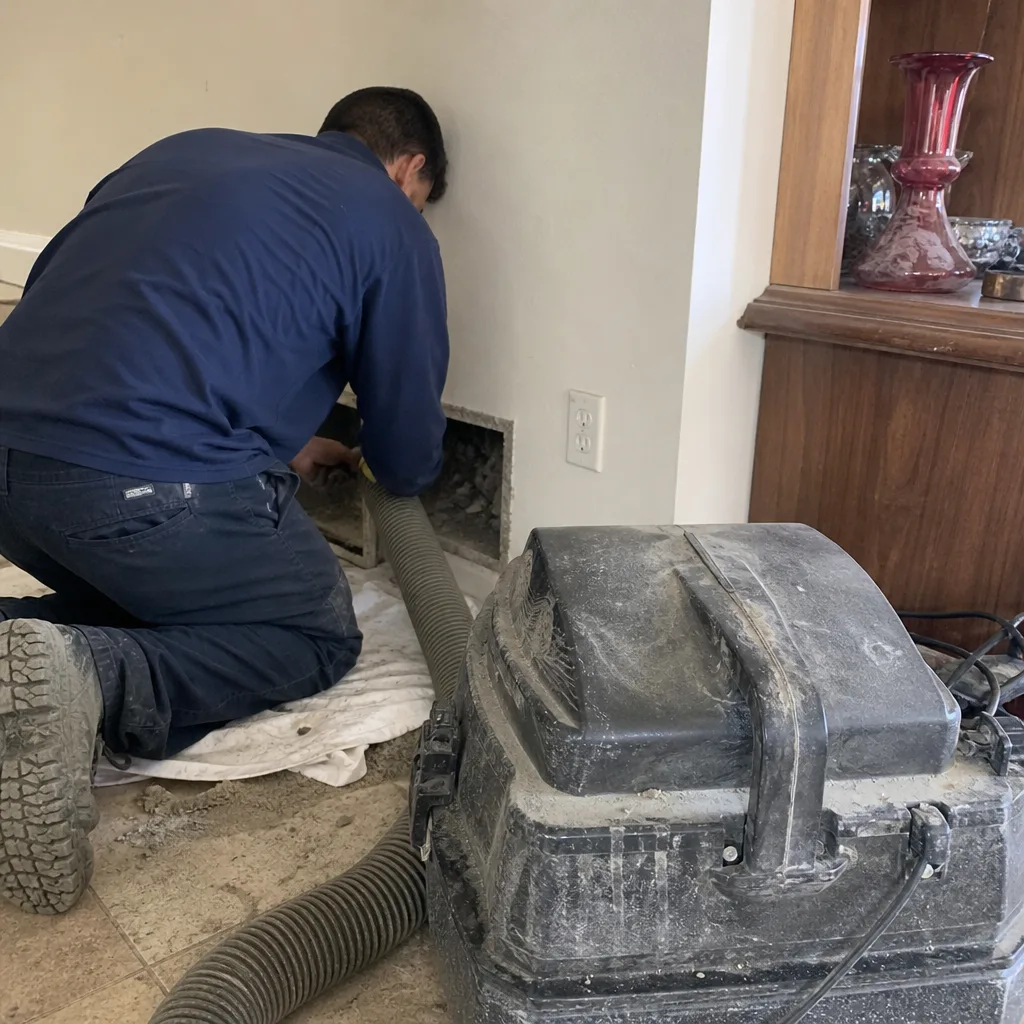 Before
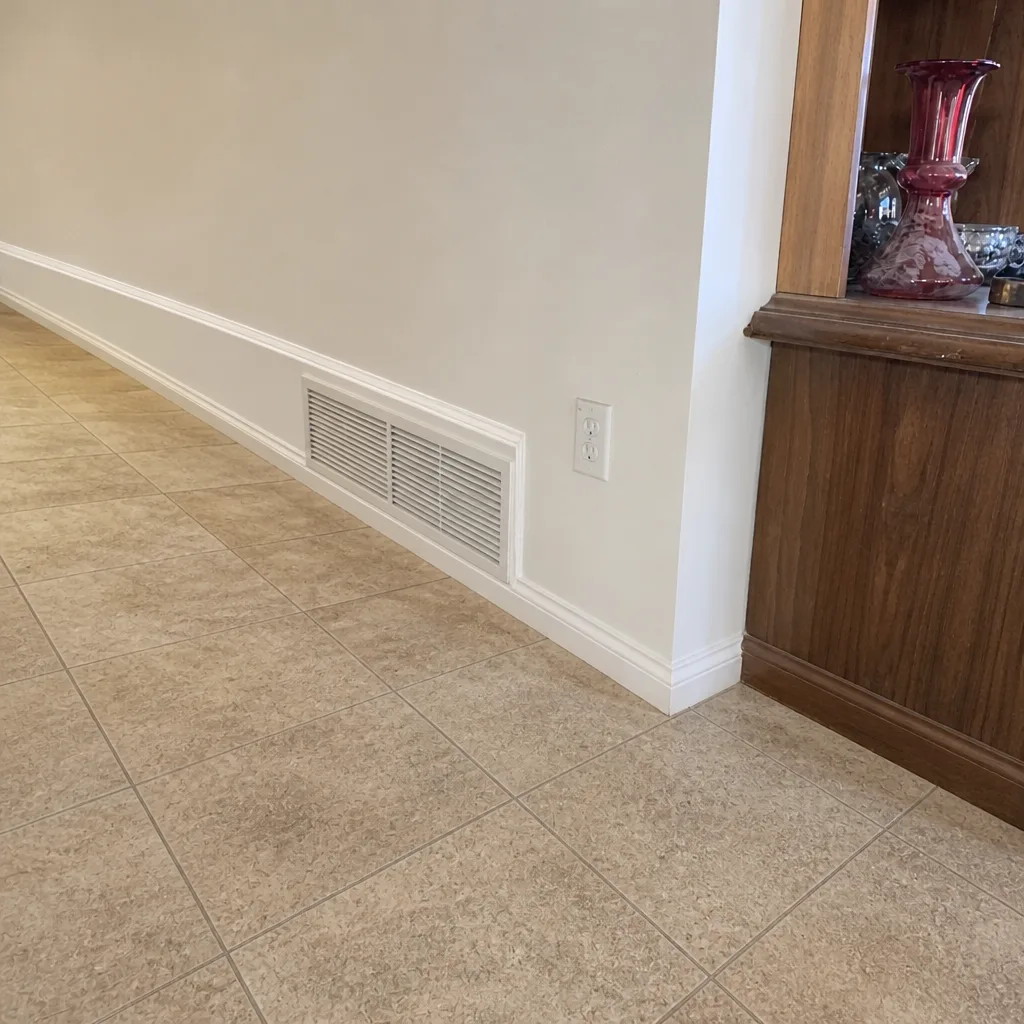 After
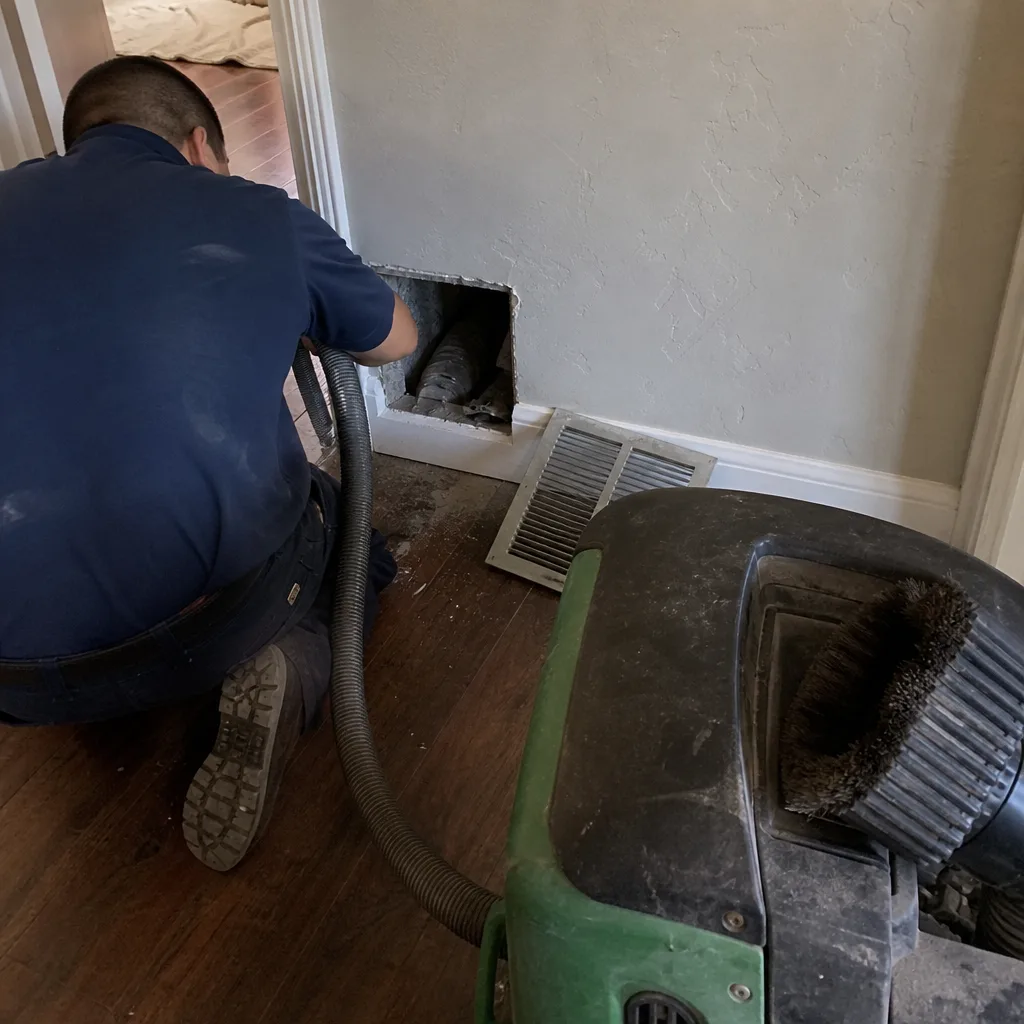 Before
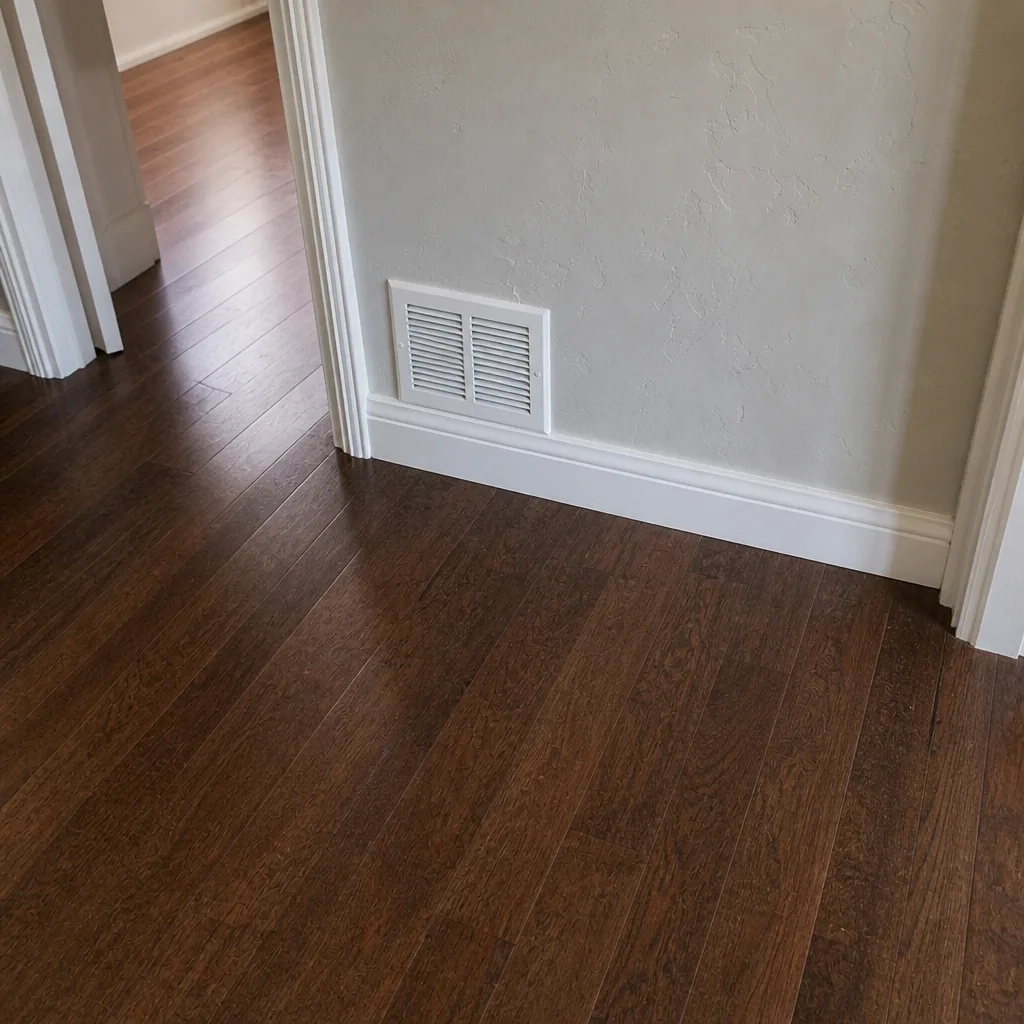 After
Common Mistakes to Avoid
- Booking on price alone. A per-vent coupon price is not a whole-system price. Ask what the scope covers, whether the return side and HVAC components are included, and whether the price can change once the technician is on site.
- Accepting a “fogging” service instead of a cleaning. Sanitizing a dirty duct seals in the debris instead of removing it. Cleaning has to come first; sanitizing is a treatment applied afterward, and only when there’s something to treat.
- Confusing register cleaning with duct cleaning. Wiping the grille does nothing about the duct behind it. In an older Tustin home with original flex duct, the debris is in the ridges and the turns, not on the face of the register.
- Skipping the assessment. The assessment is what tells you whether the job is cleaning, repair, or repair-plus-cleaning. Skipping that step means accepting a scope you haven’t verified.
- Not asking for before-and-after photos. If a company can’t show you what your ducts looked like before and after, you have no way to confirm the work was actually done. This is the single biggest trust question in this trade.
- Treating dryer vent cleaning as optional. It’s a separate fire-risk service and a lot of duct companies skip it or subcontract it. If you’re having the duct system assessed, have the dryer vent looked at at the same time.
- Closing the attic access without a leak check. If the assessment turned up a disconnected run or failed fitting in a Tustin single-story attic, that needs to be repaired and sealed before the ducts are closed up and called done.
When to Call a Professional
Call a professional when you’ve moved into a Tustin home whose duct history you don’t know, when a remodel has left construction debris in the supply side, or when someone in the household is reacting to dust and the usual filter changes haven’t helped. Call when a duct run is visibly damaged or disconnected in the attic, when the dryer takes much longer to dry a load than it used to, or when there’s a persistent odor coming from the registers even after filter replacement. Call if it has been several years since the last assessment, or if the ducts have never been assessed at all. A proper assessment gives you a scope and a price before any work begins. Tustin Air Duct Cleaning Pros offers free estimates in Tustin – call (844) 443-3616. We answer 24/7. Fast dispatch from 7am to 7pm, Sunday through Friday.
Frequently Asked Questions
It’s priced per system, not per vent, and the estimate sets the final price. The range depends on the number of runs, duct material, accessibility, and what the assessment finds. We give a flat price for the agreed scope before work begins. Call (844) 443-3616 for an exact quote – estimates are free.
Because they’re usually describing a smaller job. A low coupon price typically covers a contact-vacuum pass on the accessible runs only, without the return side, HVAC components, or negative-pressure cleaning. That’s not a discount – it’s a different scope. Ask what’s included and what can change once the technician is on site. Call (844) 443-3616 and we’ll walk you through the scope before you book.
Before-and-after photos or video of your own ducts. That’s the standard, and it’s part of the NADCA ACR process. You should see the condition of the duct interior before the work and after. If a company can’t or won’t show that, don’t book them.
It’s condition-based, not calendar-based. A recently remodeled home or a home with original 1970s-1990s ductwork needs an assessment now. After that, the interval depends on pets, allergies, duct condition, and filtration. Most Tustin homes fall into a multi-year range when there’s been no renovation or water intrusion. Call (844) 443-3616 for a free assessment that will tell you where your home sits.
Yes. dryer vent cleaning is one of our five core services and it’s included in our scope rather than subcontracted out. A clogged dryer vent is a fire-risk issue, not just a performance issue, and it’s worth checking at the same visit as the duct assessment.
We use Rotobrush and Nikro – contractor-grade rotary brush and HEPA vacuum systems, the same equipment standard in commercial and industrial duct cleaning. It matters because consumer-grade vacuums can’t create the negative pressure needed to pull dislodged debris out of a flex duct system. We also stock and service Honeywell and Aprilaire components for filtration and humidity control, and use Abatement Technologies and Guardsman products for sanitizing.
We repair and seal ducts ourselves, so the assessment, cleaning, and repair can happen under one scope. That matters in older Tustin single-story homes where attic runs often have failed fittings or disconnected sections. Cleaning a leaky system without repairing it means the ducts coat back up faster than they should. Call (844) 443-3616 for a free estimate on duct repair and sealing.
It depends on the size of the system and what the assessment finds. A typical Tustin single-family home with a full-system clean and HVAC components takes most of a visit. Duct repair and sealing adds time when it’s part of the scope. What won’t change is the price you agreed to in the written estimate.
The Bottom Line
Duct cleaning in Tustin isn’t a commodity service. The 1970s-1990s housing stock, the dry inland climate, the long attic duct runs in single-story homes, and the fine particulate that Santa Ana winds push into the region all shape what a proper cleaning needs to accomplish. The three things to hold onto: cleaning has to be done under negative pressure with contractor-grade equipment, the whole system has to be in scope (supply, return, and HVAC components), and the work has to be verifiable with before-and-after footage. Cleaning is only half the job if the ducts leak afterward – repair and sealing finish it. That’s why we work on the whole air pathway: Tustin Air Duct Cleaning Pros handles duct cleaning, dryer vent cleaning, HVAC cleaning, duct repair and sealing, and air quality treatment under one scope and one visit.
Call (844) 443-3616 for a free estimate. We answer 24/7. Fast dispatch from 7am to 7pm, Sunday through Friday. The local pro is licensed and insured as their state requires, and the written estimate sets the final price.
Written by the team at Tustin Air Duct Cleaning Pros.