
Last updated November 25, 2026
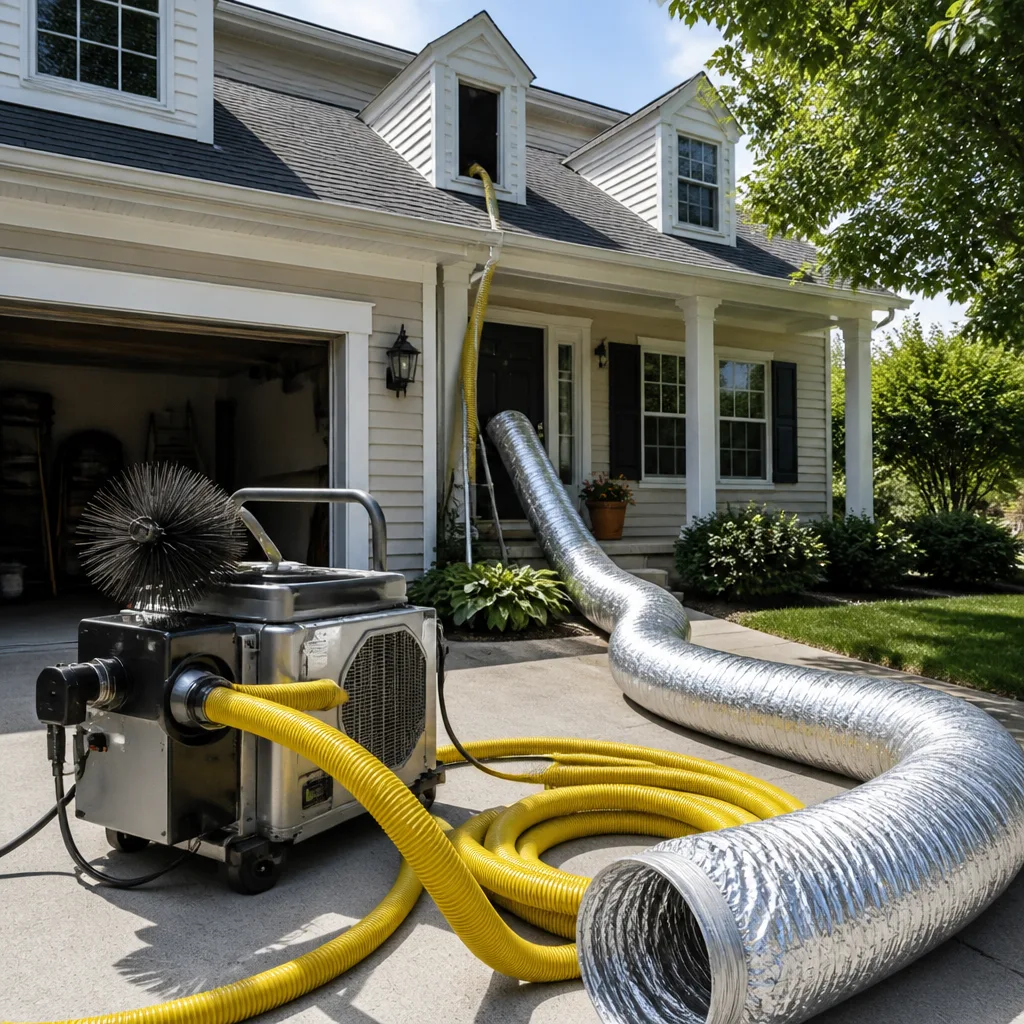 Whole-home duct cleaning
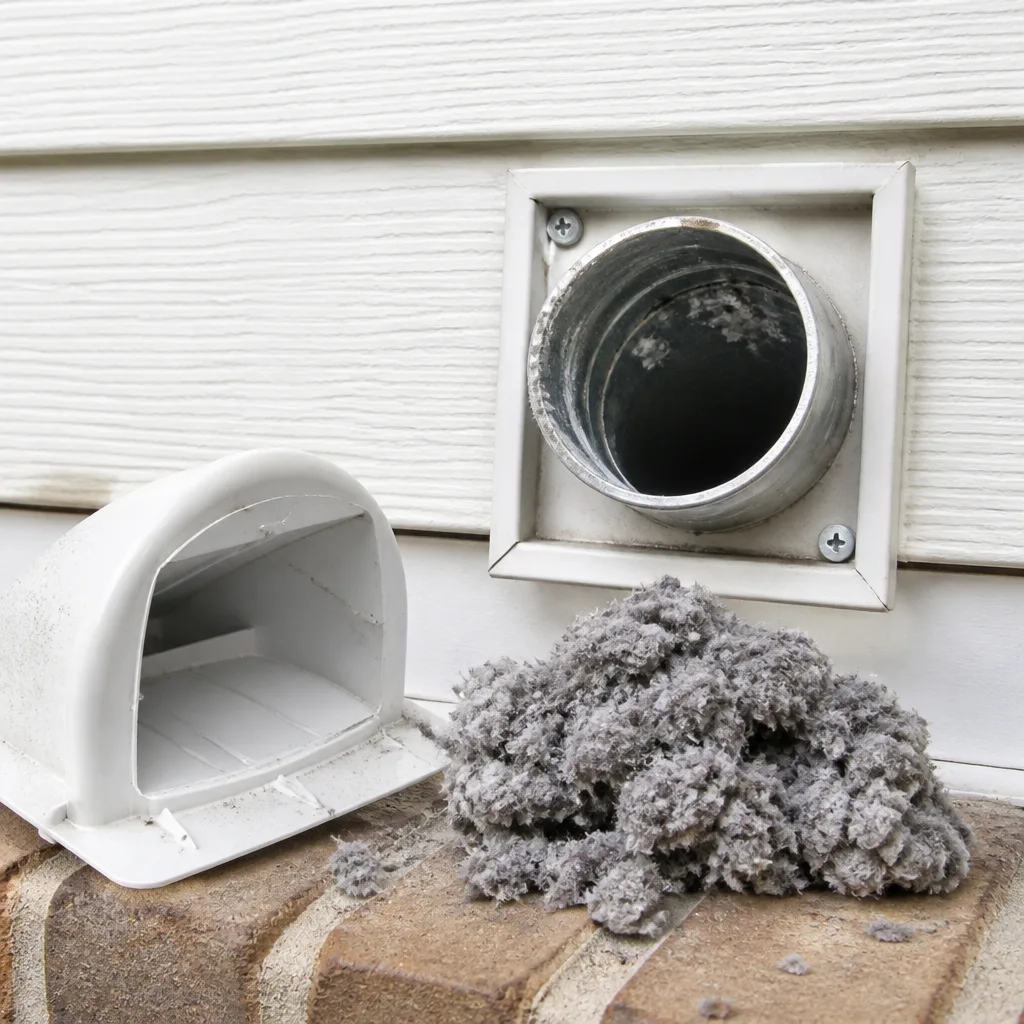 Dryer vent cleaning
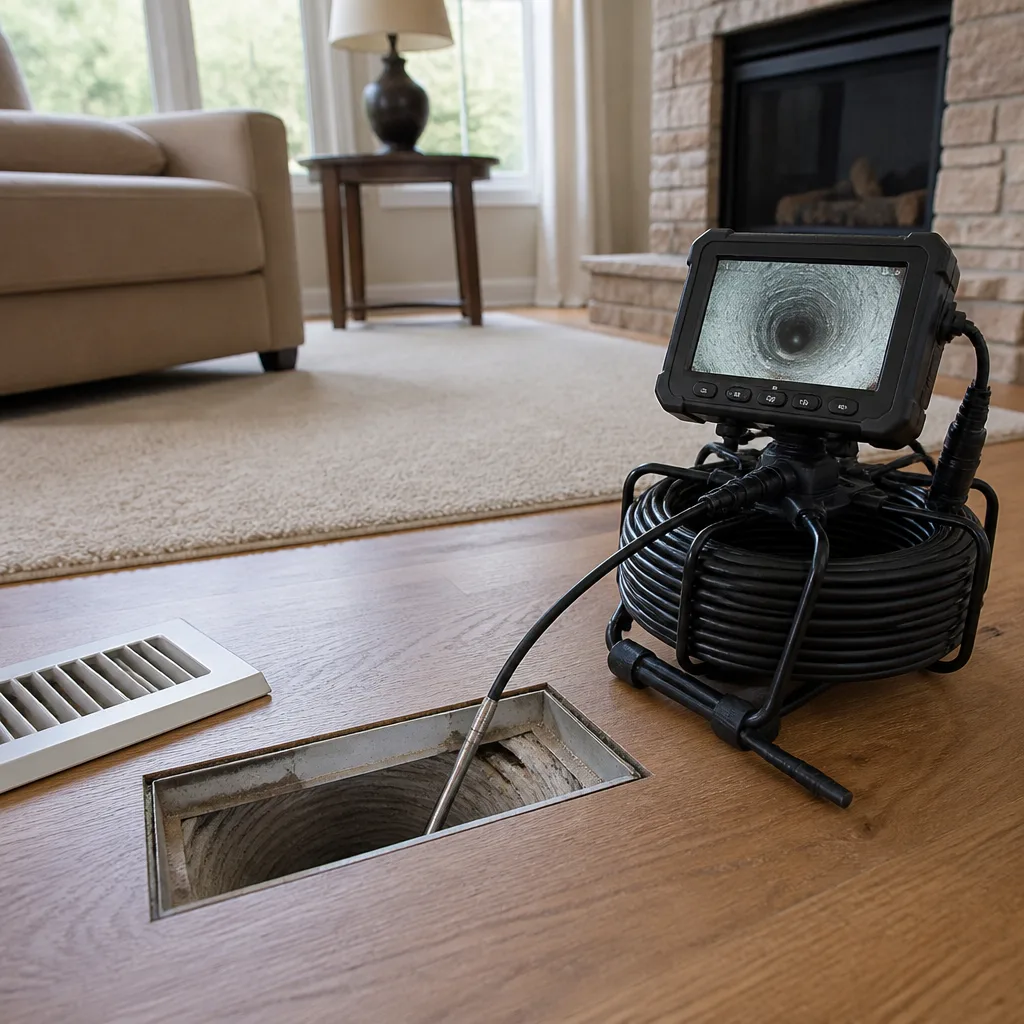 Camera inspection
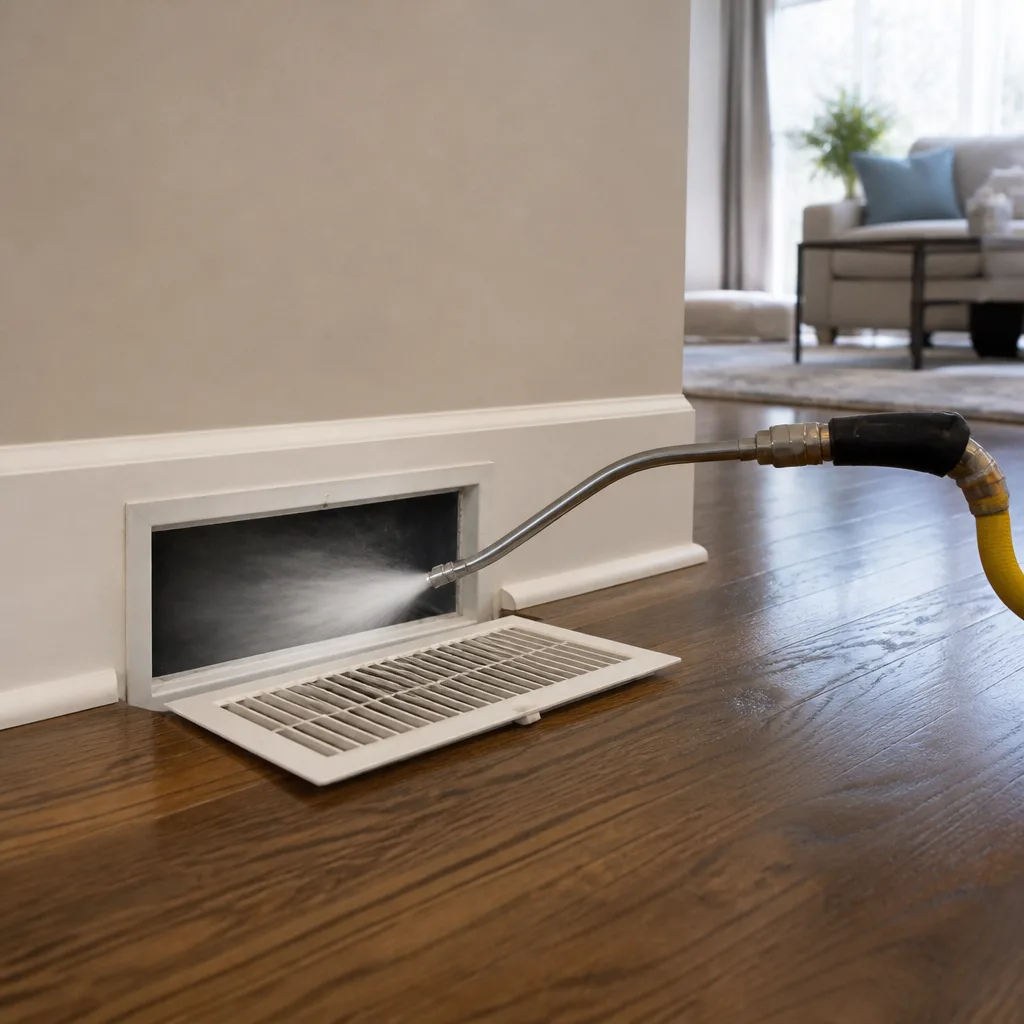 Sanitizing & deodorizing
Whole-system duct and dryer vent check with before-and-after photos - you see exactly what came out of your vents
That "$99 whole-house special" is a bait ad - the real number appears once they are in your hallway, or the "clean" is a shop-vac at the register. We photograph the inside of your ducts before and after instead.
How to Hire an Air Duct Cleaning Contractor in Tustin: A Step-by-Step Guide
That $49 duct cleaning coupon in your mailbox is a math problem you can solve before anyone knocks. It takes less suction to move a coupon price than it does to move dust, so if the number on the flyer lands below the actual cost of running real equipment for a couple of hours, something in the job has to give: the machine, the scope, or the upsell waiting at the end. In Tustin we’ve watched this play out across a market full of low-bid operators running portable vacuums from the garage. Here’s what you’ll learn below: how to ask about equipment in terms a technician can’t dodge, how to verify licensing and association membership, how to read the prescription against mold fogging, and which line items need to be in writing before a hose ever touches your register.
Quick Answer
To hire an air duct cleaning contractor in Tustin, verify three things before booking: the contractor’s California license and association membership (NADCA), the actual equipment coming to your door (contractor-grade rotary brush and HEPA vacuum systems, not a shop vac), and a written scope that defines what “clean” means at completion. Skip any quote that can’t answer those three questions in specifics. A legitimate contractor inspects first, documents what they find, and prices the job per system, not per vent.
Styles & brands we work with
- Whole-home duct cleaning
- Dryer vent cleaning
- Camera inspection
- Sanitizing & deodorizing
Table of Contents
- Step 1: Ask the Right Equipment Questions
- Step 2: Verify Licensing and NADCA Membership
- Step 3: Require a Real Pre-Job Inspection
- Step 4: Get the Scope and Contract in Writing
- Step 5: Recognize the Upsell Playbook
- Step 6: Ask What Happens After Cleaning
- Common Mistakes to Avoid
- Frequently Asked Questions
Step 1: Ask the Right Equipment Questions
Equipment is the single cleanest way to separate a real duct cleaner from a coupon operation, and it’s the question most homeowners never think to ask. When you call for a quote in Tustin, the person answering should be able to describe their machine without hesitation. If they can’t tell you whether it’s truck-mounted or portable, you’ve learned what you needed to know.
Here’s the short version: truck-mounted units generate far more air volume (measured in cubic feet per minute, or CFM) than portable units, which is why they’re standard on commercial jobs. Contractors running portable equipment can still do quality work if the machine is contractor-grade rather than consumer-grade. What you don’t want is a household shop vac dressed up with a long hose, because it can’t move enough air to pull debris out of a long horizontal run.
Ask these three questions and listen for specific answers:
- Is the vacuum truck-mounted or portable, and what CFM does it pull? A contractor running a real rotary brush system should know the number. Vague answers (“it’s a powerful one”) are a warning.
- What brush system do you use? Rotary brush systems like Rotobrush are the industry standard for residential ductwork because they agitate caked-on debris while the vacuum captures it. Nikro is another name you’ll hear on contractor-grade vacuum and filtration equipment.
- Do you use HEPA filtration? HEPA filtration matters most if anyone in the house has allergies or if the ducts are being cleaned after a renovation.
If you’re wondering what full-service work actually includes, our air duct cleaning page goes into detail about the equipment and process. The point of this step is simpler: get the contractor to commit to a name and a number, not a marketing adjective.
Step 2: Verify Licensing and NADCA Membership Before Anyone Enters Your Home
A contractor bringing equipment into your attic and crawlspace should be verifiable as a business before they set foot inside. Two checks take about ten minutes total, and both are worth doing.
Check the state license
California licenses contractors through the Contractors State License Board. You can search the license number online and see whether it’s active, whether it’s the right classification for HVAC and duct work, and whether the business has any disciplinary history. Ask for the license number in writing; a legitimate contractor provides it without fuss. Ask about general liability insurance too, and confirm the policy is current. You don’t need the certificate number memorized, but you do want to hear that coverage exists.
Check NADCA membership
NADCA is the National Air Duct Cleaners Association, and membership means the contractor has agreed to a published standard for how the work gets done. You can verify membership directly through the association. Membership isn’t a guarantee of quality on every job, but its absence on a company that advertises itself as a duct specialist is a meaningful signal.
- License number requested and verified on the state board site.
- General liability insurance confirmed as active.
- NADCA membership verified through the association, not just an unverified logo on a website.
- Written confirmation of who will actually be on site (the company itself or a subcontractor).
One more note on subcontracting: some duct cleaners clean ducts but subcontract dryer vent work. If your appointment includes both, find out who’s actually arriving. Here at Tustin Air Duct Cleaning Pros, every service in our five-part menu stays with our team, so you’re not coordinating between two companies. Our technicians have up to 10 years of experience, and we work with professional equipment throughout.
Step 3: Require a Real Pre-Job Inspection
A legitimate duct cleaning starts with a look, not a vacuum. Before any equipment comes in, the technician should walk the system: the air handler or furnace cabinet, the supply and return trunks, the registers, and any accessible flex runs. In Tustin, that inspection regularly turns up things a coupon quote never accounts for, like flex duct that’s been pinched by a remodel or a return run that’s leaking at the joint.
What a proper inspection should include:
- Visual access to the air handler and main trunks. Some systems need a small access cut; that’s normal, and a good contractor explains it before doing it.
- Photos of what they find. Ask to see them before the quote is final. If the technician finds contamination, photos are how you evaluate the claim instead of taking it on faith.
- A written record of the inspection. Which registers were checked, whether any ducts were disconnected or damaged, whether the system is fiberglass-lined.
- An honest note on what cleaning won’t fix. Duct cleaning doesn’t repair a leaking joint, a collapsed run, or a poorly designed return. If the technician doesn’t mention repair as a possible finding, ask whether the system could have leaks.
Documentation cuts both ways. It protects you from a contractor inventing a problem, and it protects the contractor if the ducts genuinely need work. Ask for before-and-after photos of your own system, not brochure images. Any contractor who can’t produce those for your job has skipped the most basic accountability step.
Step 4: Get the Scope and Contract in Writing Before Work Begins
The written scope is where a fair quote and a vague one differ, and it’s the line item most homeowners skip. Require these elements in writing before anyone starts:
- Scope of work. Which systems are being cleaned (supply, return, both), how many registers, and whether the air handler cabinet is included.
- Equipment specified. The actual machine and brush system being used, by name. This locks the contractor to real equipment instead of whatever shows up.
- The definition of “clean.” Ask the contractor to describe what “clean” looks like at completion. NADCA’s published standard is a reasonable baseline to reference.
- Flat pricing per system. One price for the system cleaned, agreed before work starts, not priced per vent. Per-vent pricing is how a $69 quote becomes a $900 invoice.
- Add-on authorization. Any add-on (sanitizing, sealing, repair) should require written approval before it happens. No verbal upselling at the register.
- Disposal and cleanup. Who removes what, and whether your floors and furniture get protective covering.
If a contractor won’t put equipment and scope on paper, that’s the interview ending. A quote with a real number, a system description, and a named machine is the standard. Everything else is a sales document.
Step 5: Recognize the Upsell Playbook
The three most common add-ons in this industry are antimicrobial sprays, “mold fogging,” and a vague “sanitizing treatment.” None of them are automatically wrong. Antimicrobials and sanitizing products exist for a reason, and products like Abatement Technologies and Guardsman have legitimate industrial roots. But the honest way to evaluate any of them is the same: ask what the product does, what the evidence is, and whether cleaning alone would address the problem.
Here’s a working framework:
- Ask what was found. If the technician is recommending mold treatment, they should show you the visual evidence and explain why the moisture source exists. A dusty duct is not automatically a moldy duct.
- Ask what happens if you decline. If the answer is “nothing really, cleaning handles most of it,” you’ve found an honest contractor.
- Separate contamination from discomfort. A musty smell can come from a wet drain pan or a clogged condensate line, not the ducts. Fixing the moisture source matters more than fogging the ducts above it.
- Beware “everyone needs this” pricing. An upsell that’s presented as mandatory to every household is a red flag, especially when the price appears mid-job.
We do offer air quality and sanitizing as a service, using professional products from Abatement Technologies and Guardsman. The point of this section is that you should be able to evaluate it on its merits. If you can’t, decline and get the ducts clean first.
Step 6: Ask What Happens After Cleaning
Clean ducts are only half the job. Ducts leak at the joints, the boots, and the plenum connections, and a system that’s leaking 20 to 30 percent of its conditioned air is going to pull contaminated air back in every time the blower runs. That’s why the contractor worth hiring is the one who can diagnose and correct leaks, not just vacuum and leave.
When you’re comparing quotes in Tustin, ask each contractor what they do about leaks. A company with duct repair and sealing in-house can test and seal joints, reattach disconnected boots, and in some cases re-route poorly laid flex runs. A company that only cleans will send a different contractor back out, or hand you a phone number and call it done.
The same question applies to your HVAC equipment. Cleaning the ducts while leaving a dirty evaporator coil untouched misses the source. If you want that handled in one visit, look at our HVAC cleaning service. And if your dryer vent is overdue (a genuine fire-risk reduction service many duct cleaners skip or subcontract), that’s a separate scope: dryer vent cleaning matters because lint accumulation in the vent run is a documented ignition source, and a company that handles it in-house saves you the coordination.
Common Mistakes to Avoid
- Booking the first $49 coupon you see. A price that low almost guarantees a portable shop vacuum and a technician paid on commission to upsell mold treatment. The savings comes back as an inflated add-on at the register.
- Skipping license verification. California contractors must be licensed; the state board site takes five minutes. If a company can’t produce a license number, don’t let them near the attic access.
- Accepting a per-vent price. Per-vent pricing makes it impossible to compare quotes and invites surprise charges for “extra” registers. Ask for a flat price per system.
- Letting the technician close the day without before-and-after photos. Photos of your own ducts are the single best proof of work completed; without them, you’re taking the invoice on faith.
- Approving mold fogging without evidence. Visual confirmation of actual growth in the duct run should precede any antimicrobial spray. Fogging a dusty duct doesn’t fix anything and often masks a moisture problem.
- Forgetting to ask about leak sealing. A cleaning that leaves leaking joints in place is a partial job. Ask what repair capability the contractor has in-house, not just across town.
- Overlooking the dryer vent. Many duct cleaners subcontract dryer vent cleaning to another company, which means you’re coordinating two appointments. Ask who actually handles it.
See the difference
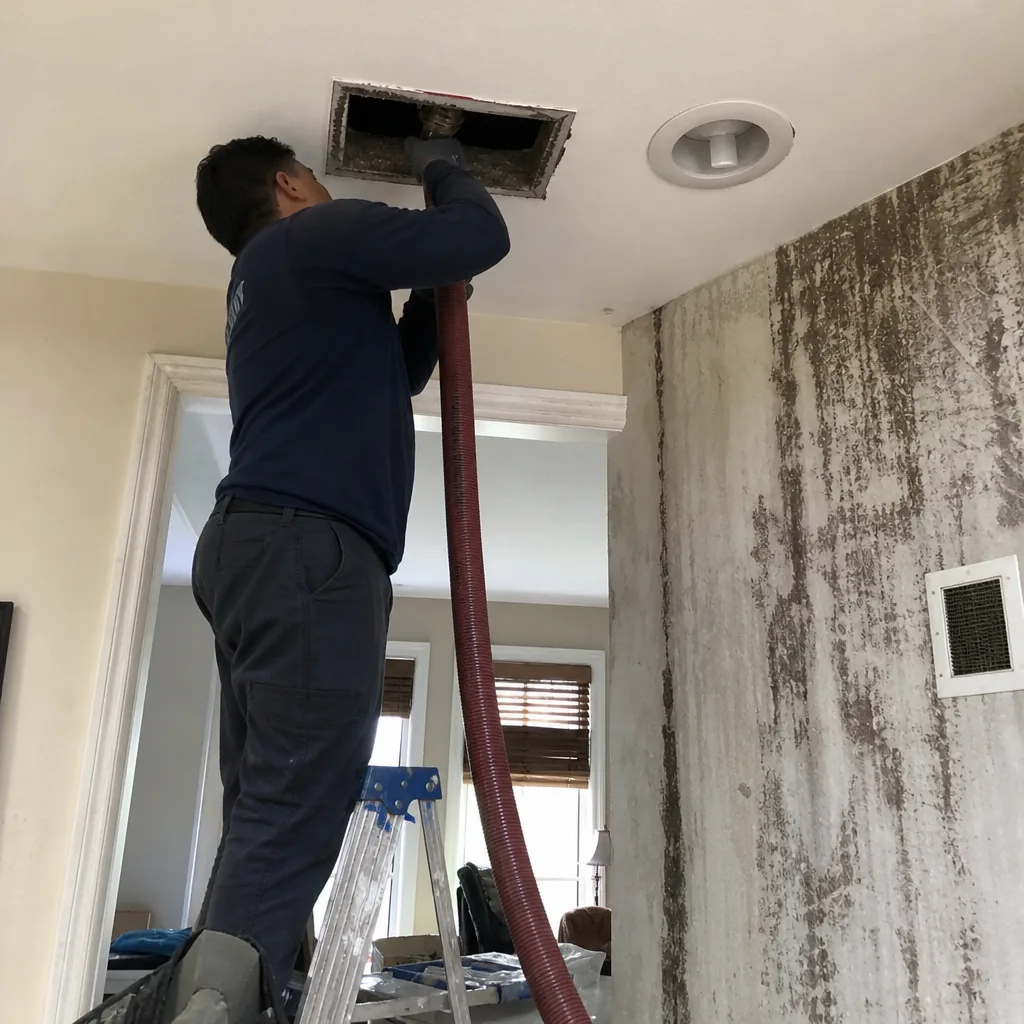 Before
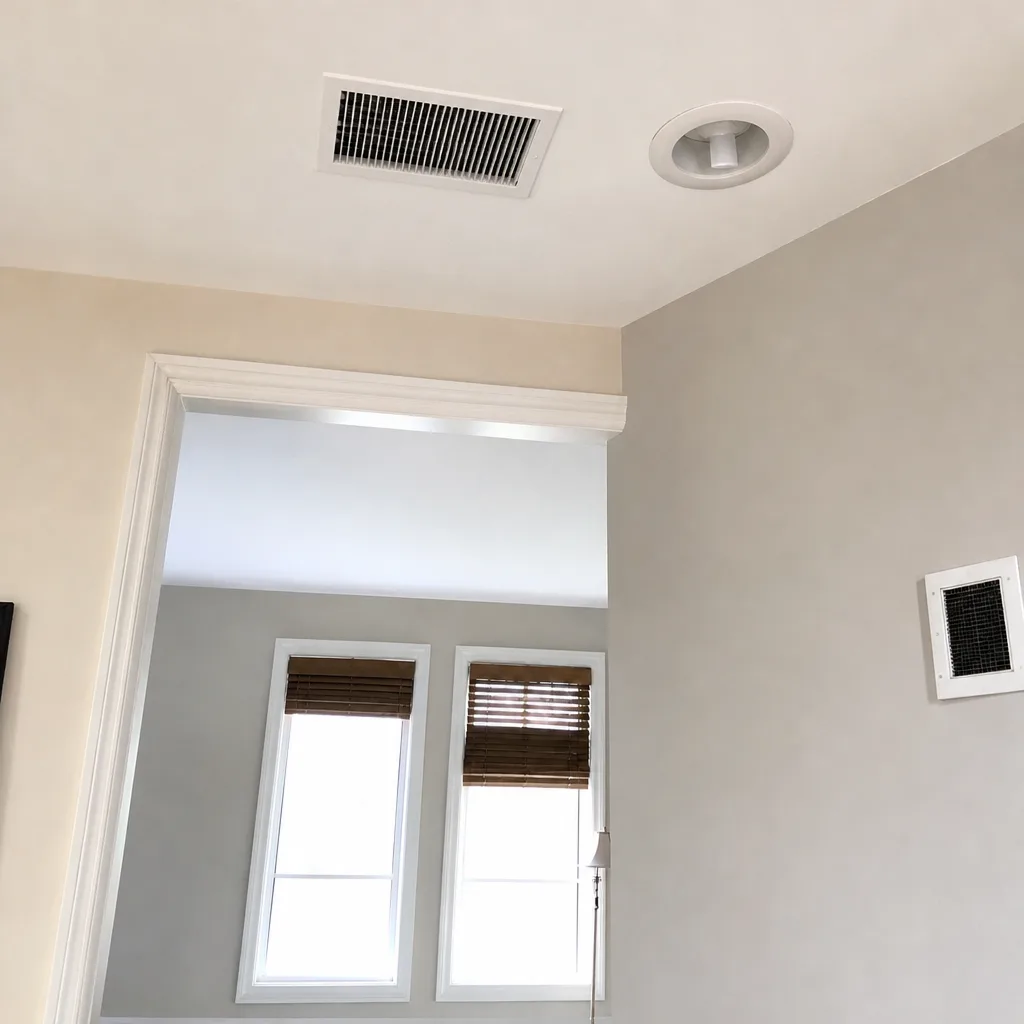 After
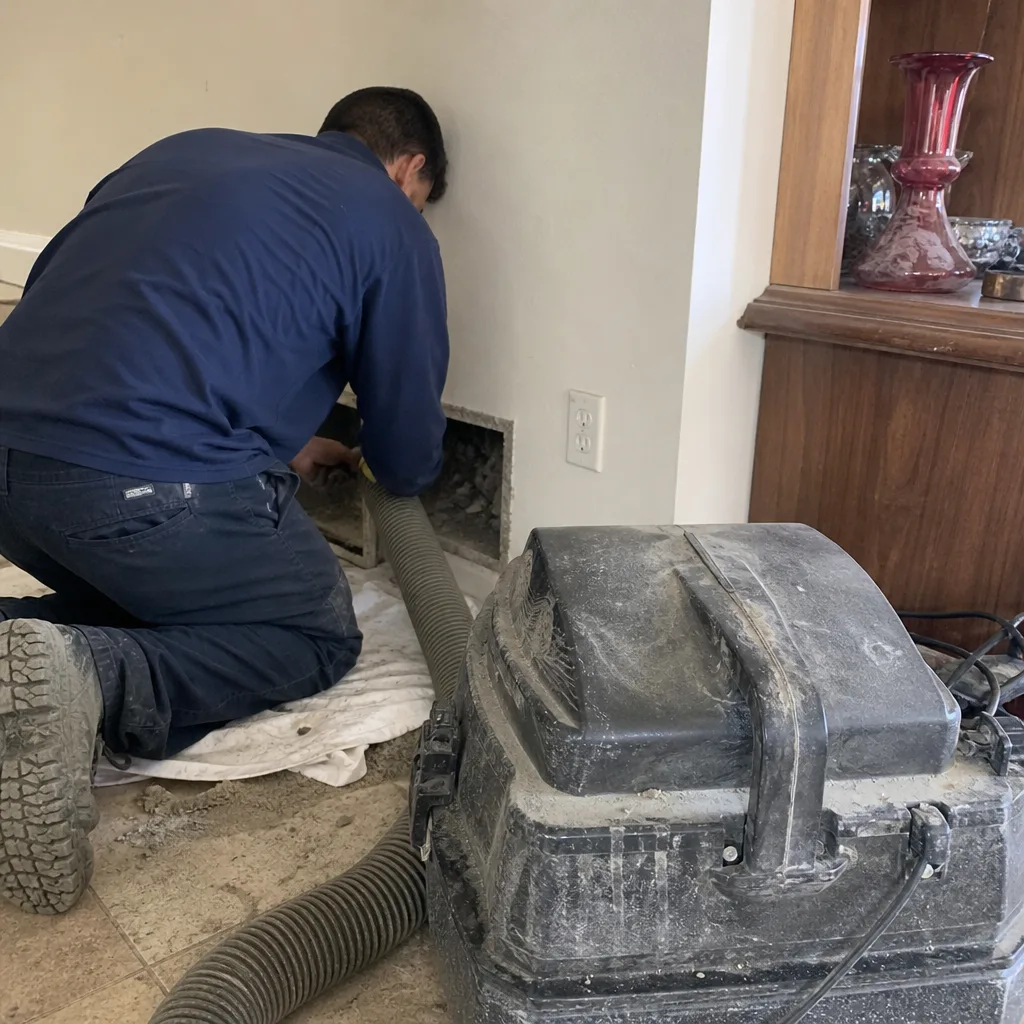 Before
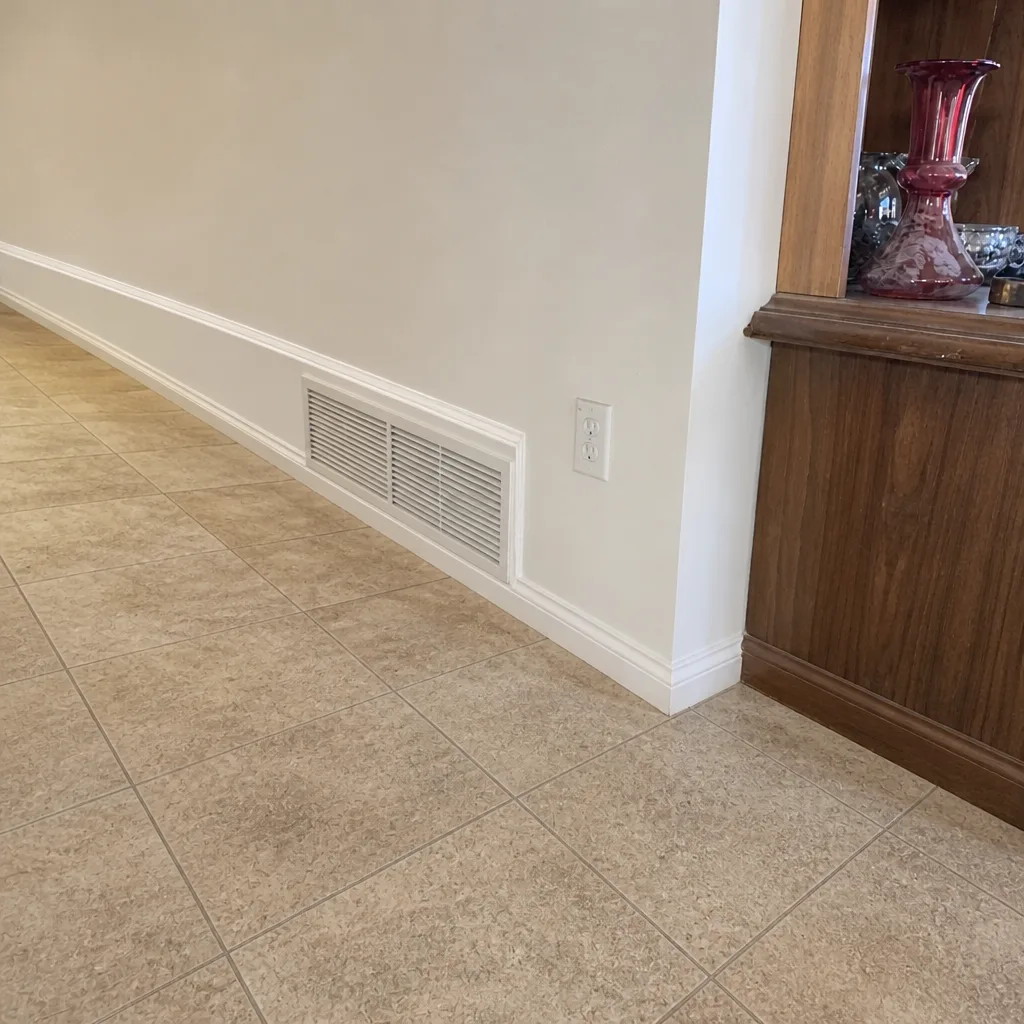 After
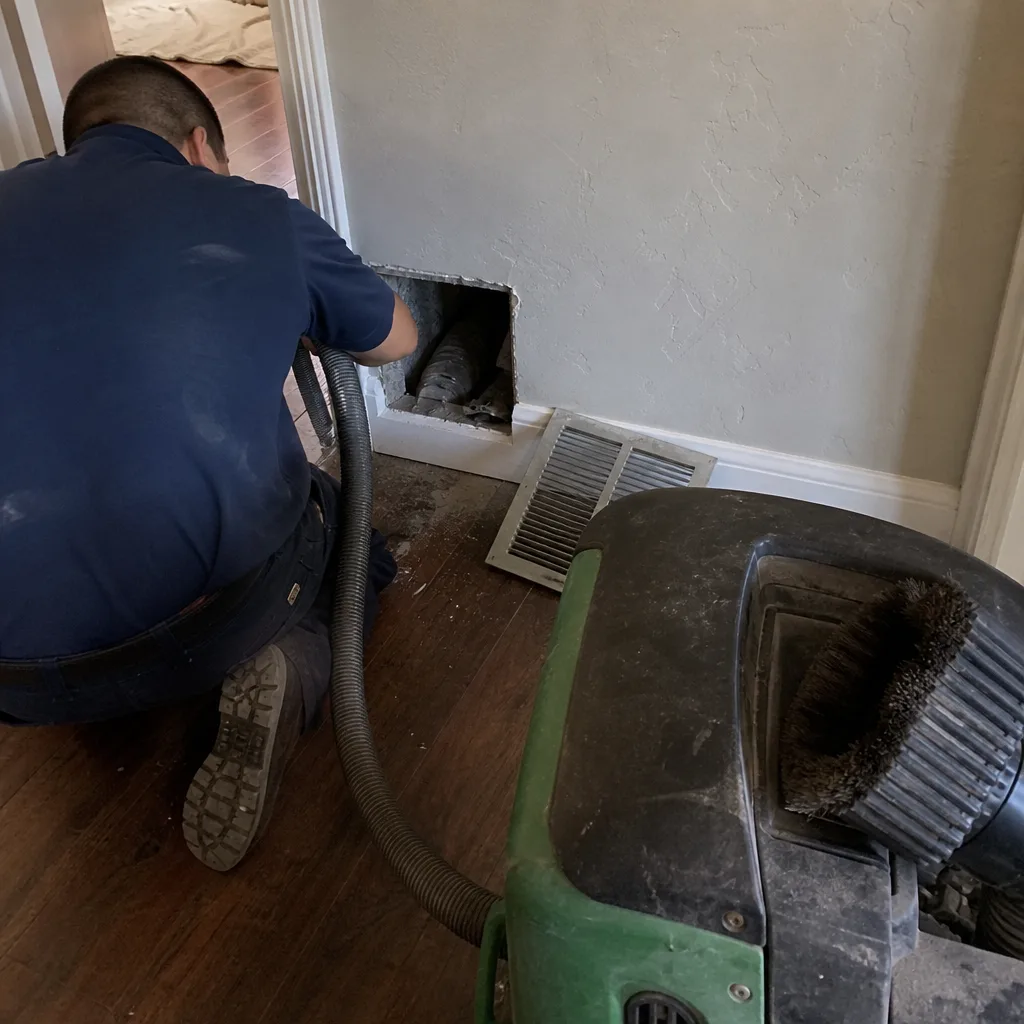 Before
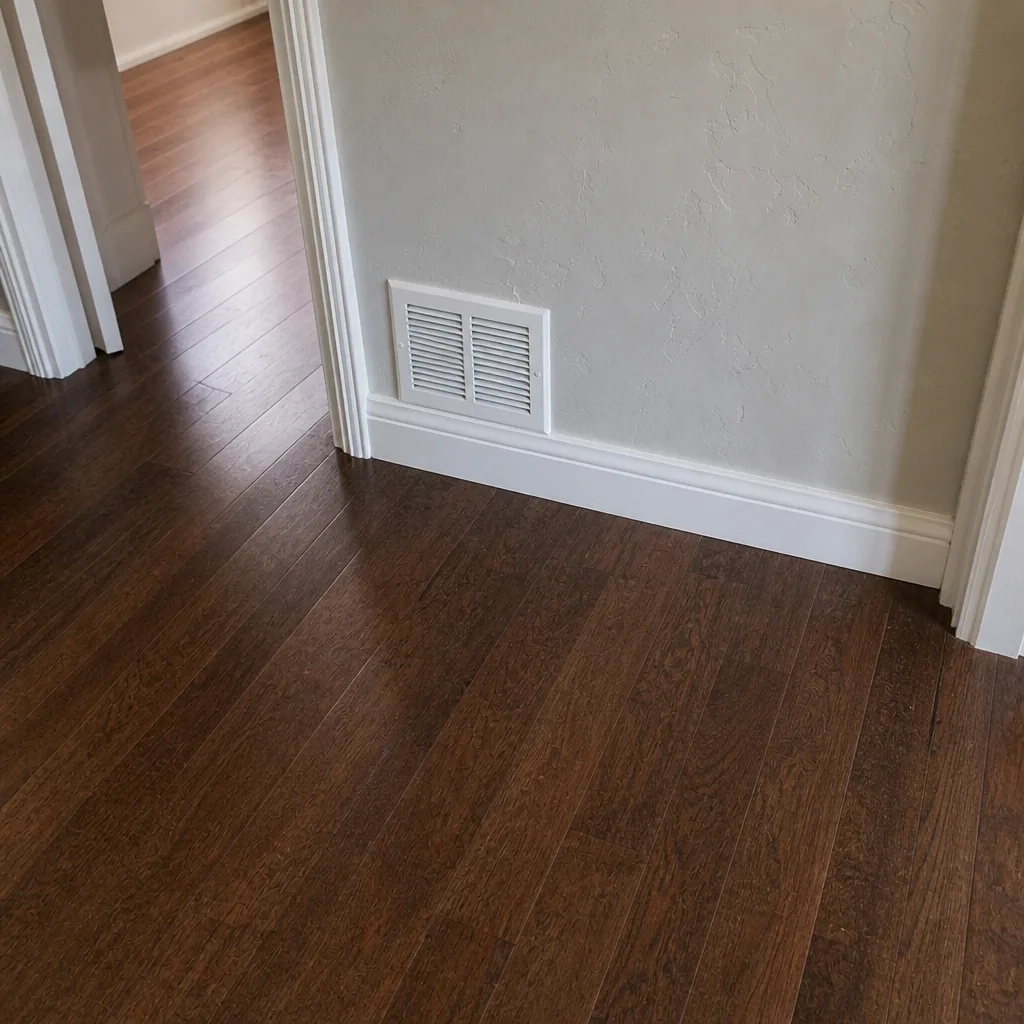 After
When to Call a Professional
You need a professional air duct cleaning in Tustin when the signs point to a system issue, not a dust issue. That includes visible debris or pest evidence in the registers, a musty smell that persists after the HVAC filters are replaced, a recent renovation that pushed drywall dust through the returns, a move into an older home where the previous owner’s cleaning history is unknown, or a family member with allergies who’s reacting to indoor air. Poor airflow from some registers, coupled with clean filters, is another cue: it may mean a disconnected flex run or a duct leak that needs repair, not just vacuuming. If you’re planning to sell, a documented cleaning and inspection gives you something concrete to hand over. Our free estimates in Tustin are the place to start: call (844) 443-3616. We answer 24/7. Fast dispatch from 7am to 7pm, Sunday through Friday.
Frequently Asked Questions
A typical whole-system cleaning in Tustin runs on the order of a few hundred dollars per system, priced on the number of systems and registers, not per vent. Expect an on-site inspection before the number is finalized. Anything quoted below a few hundred dollars for a full-home job raises the equipment question: the machine can’t do the work at that price. Call (844) 443-3616 for an exact quote. Estimates are free.
Cheap quotes are cheap for a reason: portable consumer vacuums with too little suction, per-vent pricing designed to balloon once the technician arrives, and a commission-driven add-on at the end. The low price is the opening offer, not the final invoice. A quote that names the equipment and the scope is the only one worth comparing. Call (844) 443-3616 to get an honest per-system number. Estimates are free.
Before-and-after photos of your own ducts, taken during the job, plus a written scope that defined “clean” at completion. A contractor who can’t produce those photos for your household is asking you to take the invoice on trust. Ask beforehand whether photos of your system are included in the report. Call (844) 443-3616 to schedule a job that documents itself.
For most households, every three to five years is reasonable, though that’s a starting point rather than a fixed rule. Homes with pets, recent renovation dust, or allergy concerns benefit from more frequent cleaning. If you haven’t had the ducts inspected since buying the house, that’s a fair trigger regardless of the calendar. Call (844) 443-3616 to set up an inspection. Estimates are free.
Yes, our equipment and process cover both. The rotary brush and HEPA vacuum systems we use are the same caliber commercial contractors rely on, which means a residential system gets the same treatment standard as a commercial one. If you’re managing a property and need documentation for multiple units, we can scope that. Call (844) 443-3616 to discuss it. Estimates are free.
Sometimes, but only if the ducts are the source. A musty smell often traces to a wet condensate pan, a clogged drain line, or mold growth near the air handler, none of which duct cleaning alone corrects. A proper inspection locates the moisture source first. Cleaning follows, then sanitizing if warranted. Call (844) 443-3616 to start with the inspection, not the spray. Estimates are free.
The Bottom Line
Hiring an air duct cleaning contractor in Tustin comes down to three verifiable questions: what equipment is coming to the door, is the contractor licensed and association-verified, and what’s in the written scope. Answer all three and you’ve separated real duct cleaning from the coupon trade. Add before-and-after photos, a flat price per system, and a contractor who handles repairs and sealing in-house, and you’ve got a job that actually solves the problem. Everything else is a sales pitch. Our team works on the whole air pathway, from cleaning through repair, sealing, and sanitizing, using contractor-grade equipment from Nikro and Rotobrush and products from Abatement Technologies and Guardsman. Call Tustin Air Duct Cleaning Pros at (844) 443-3616 for a free estimate on duct cleaning, dryer vent service, HVAC cleaning, duct repair, or air quality treatment. We answer 24/7. Fast dispatch from 7am to 7pm, Sunday through Friday.
Written by the team at Tustin Air Duct Cleaning Pros.